


In Select Theaters September 15, Streaming Globally On Prime Video September 22
Directed by Roger Ross Williams
Written by David Teague & Roger Ross Williams
Cast Gael García Bernal, Roberta Colindrez, Perla de la Rosa, Joaquín Cosío, and Raúl Castillo with special appearances from El Hijo del Santo and Benito Antonio Martínez Ocasio
Consultant Saúl Armendáriz
Produced by Gerardo Gatica, Todd Black, David Bloomfield, Ted Hope, Julie Goldman
Executive produced by Gael García Bernal, Paula Amor, Mariana Rodríguez Cabarga, A. Müffelmann, Matías Penachino, David Teague, Jason Blumenthal, Steve Tisch
Runtime 107 minutes
LOGLINE
Saúl Armendáriz, a gay amateur wrestler from El Paso, rises to international stardom after he creates the character ‘Cassandro,’ the “Liberace of Lucha Libre.” In the process, he upends not just the macho wrestling world, but also his own life. Based on a true story. Directed by Academy Award® winner Roger Ross Williams.
SHORT SYNOPSIS
When Saúl Armendáriz (Gael García Bernal) starts competing in the macho world of Mexican Lucha Libre wrestling, he’s always cast as the runt. After he meets Sabrina (Roberta Colindrez), Saúl gains not only a professional trainer but also a friend who helps him create a new character in the ring. Together they debut ‘Cassandro,’ a radical subversion of Lucha Libre’s stereotypical role known as the Exótico. Flamboyant and powerful, Cassandro turns lucha on its head. But Cassandro also upends Saúl’s own life, throwing into tumult his relationships with his mother Yocasta, his secret lover Gerardo, and his absent father Eduardo.
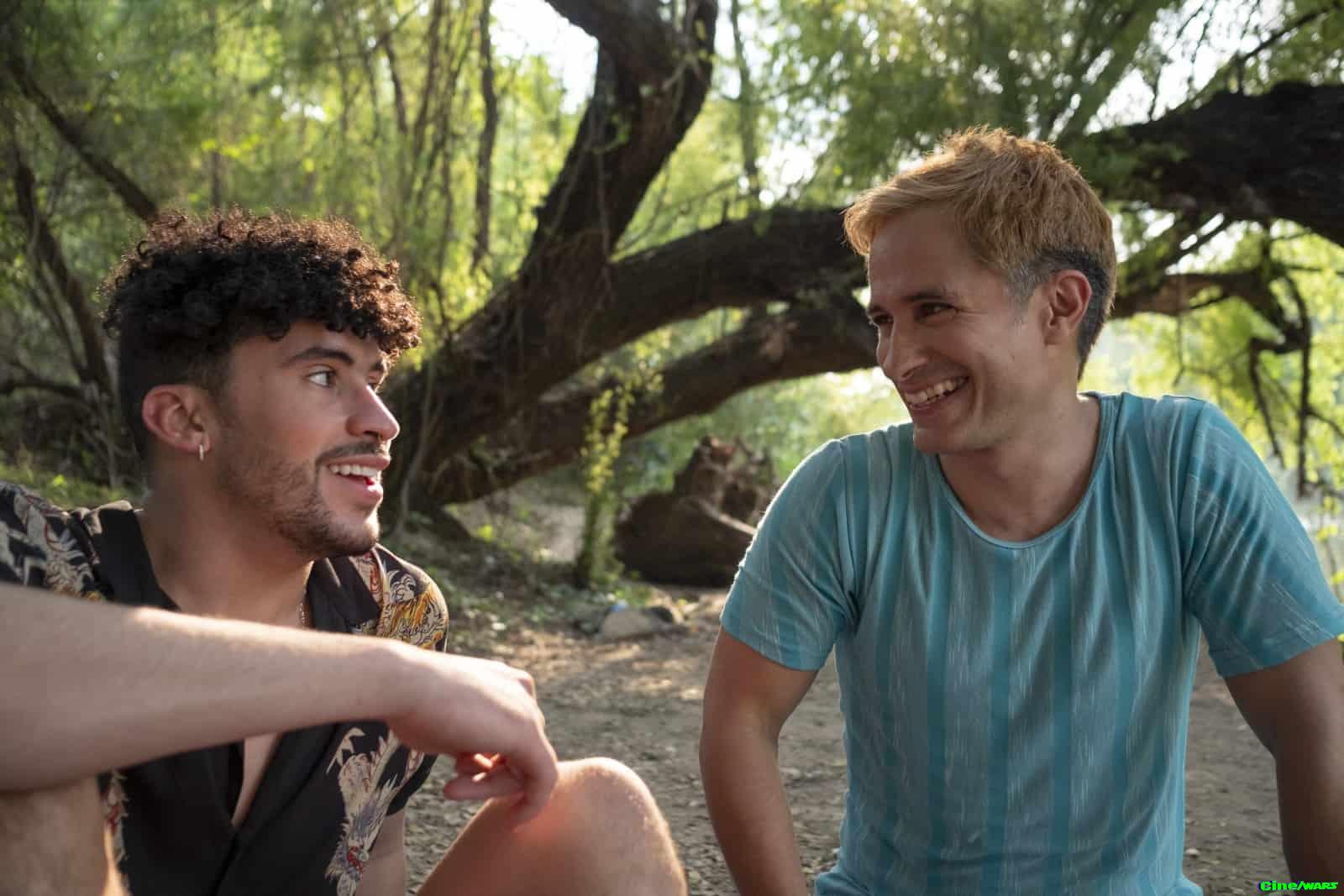


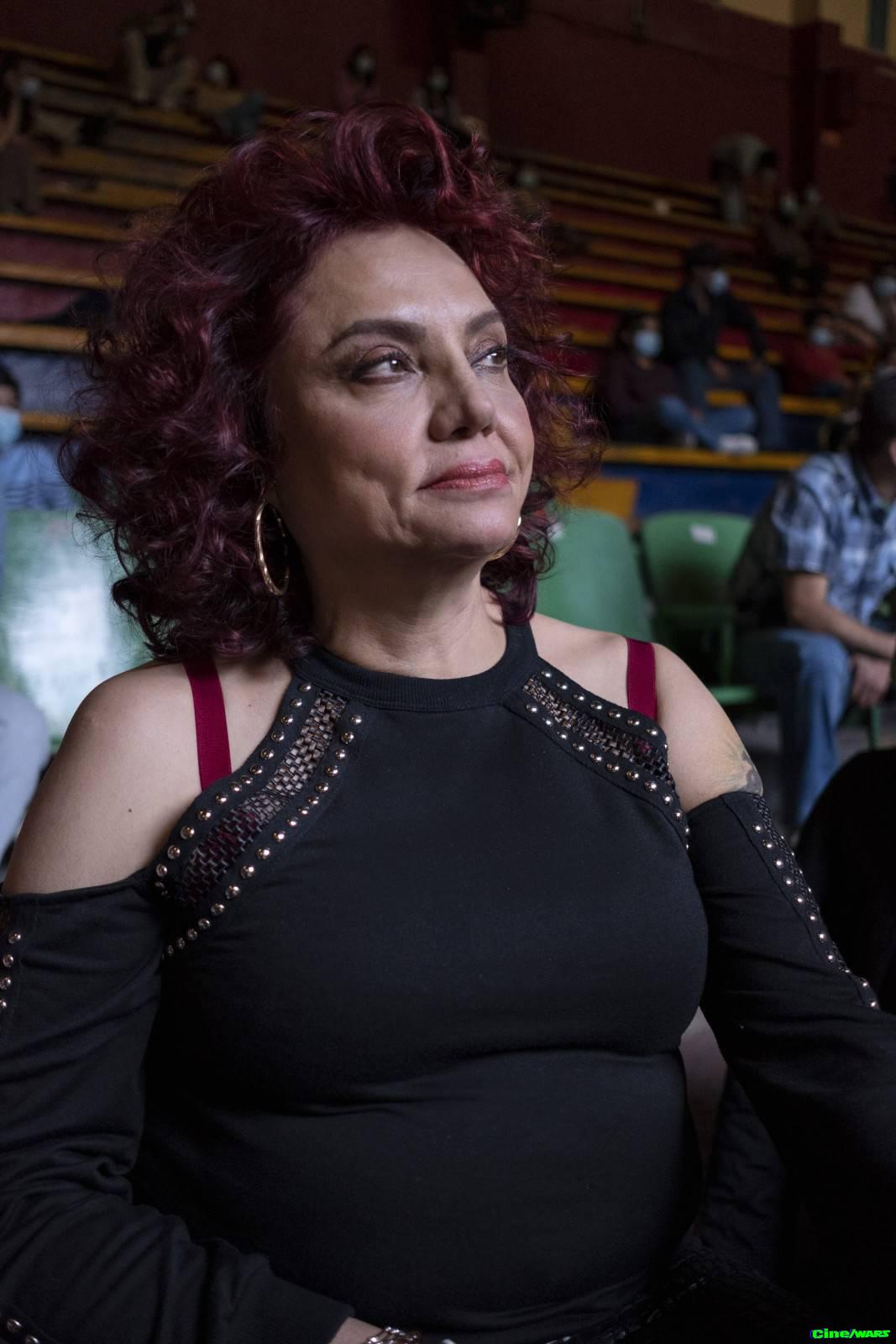
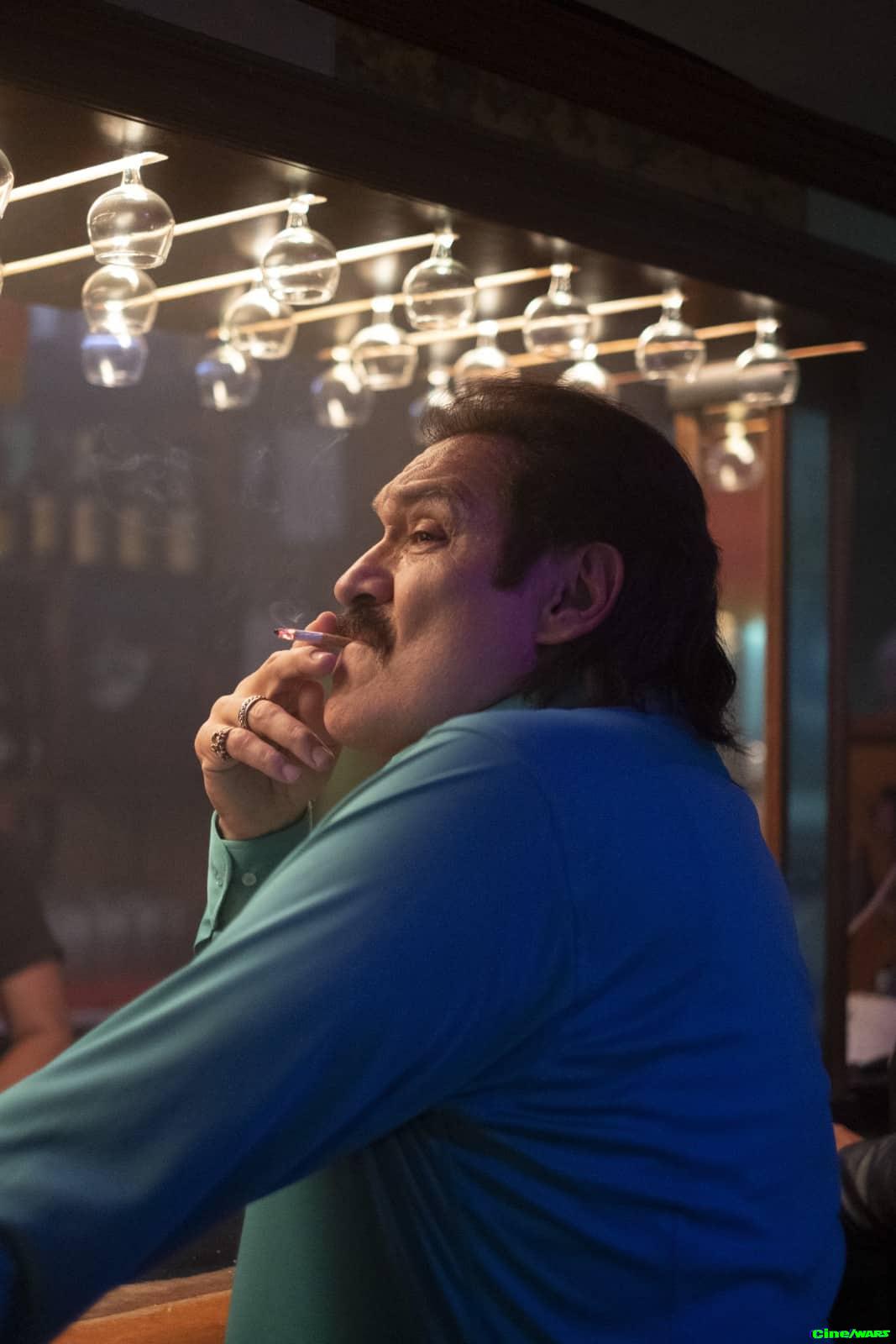

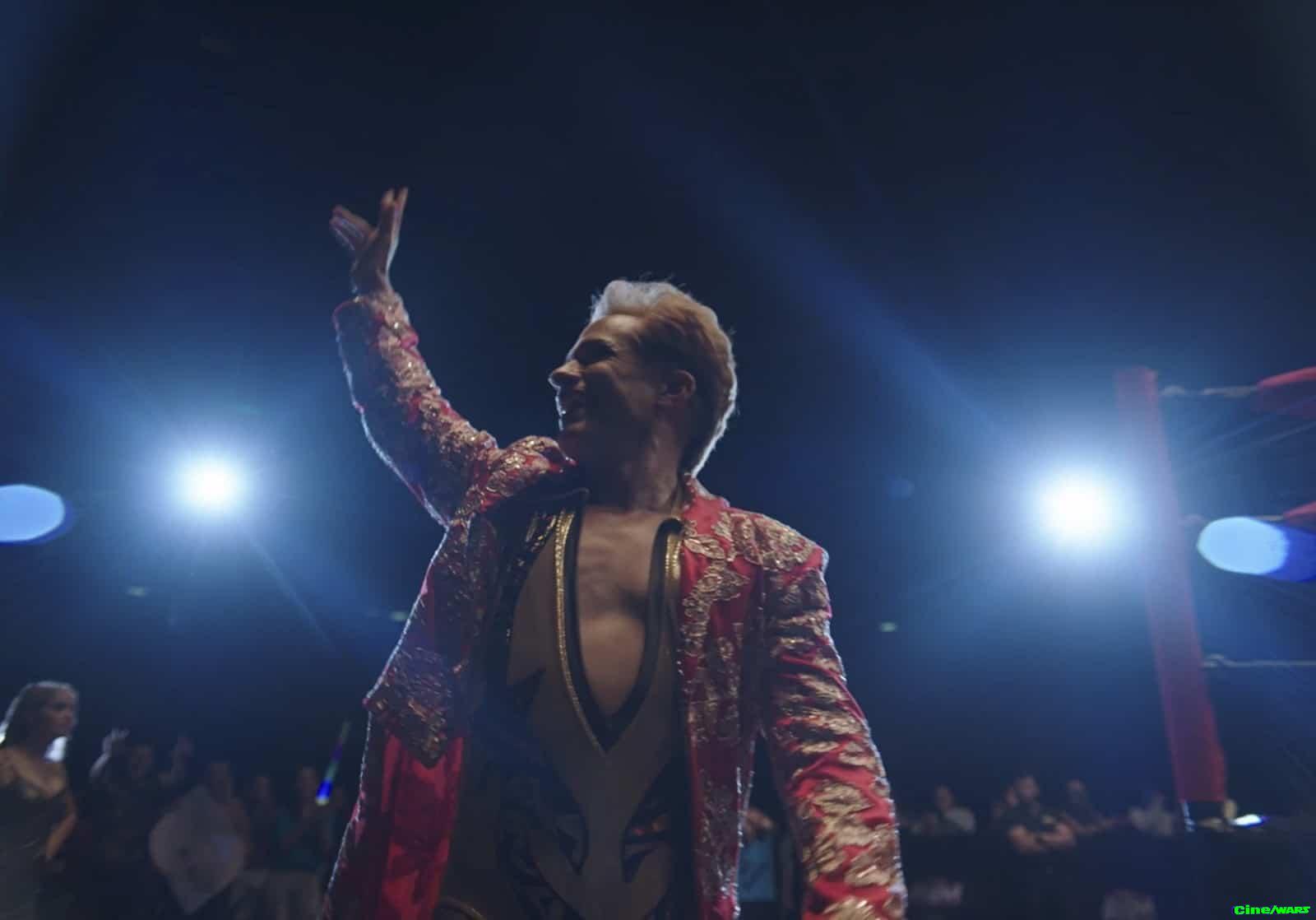

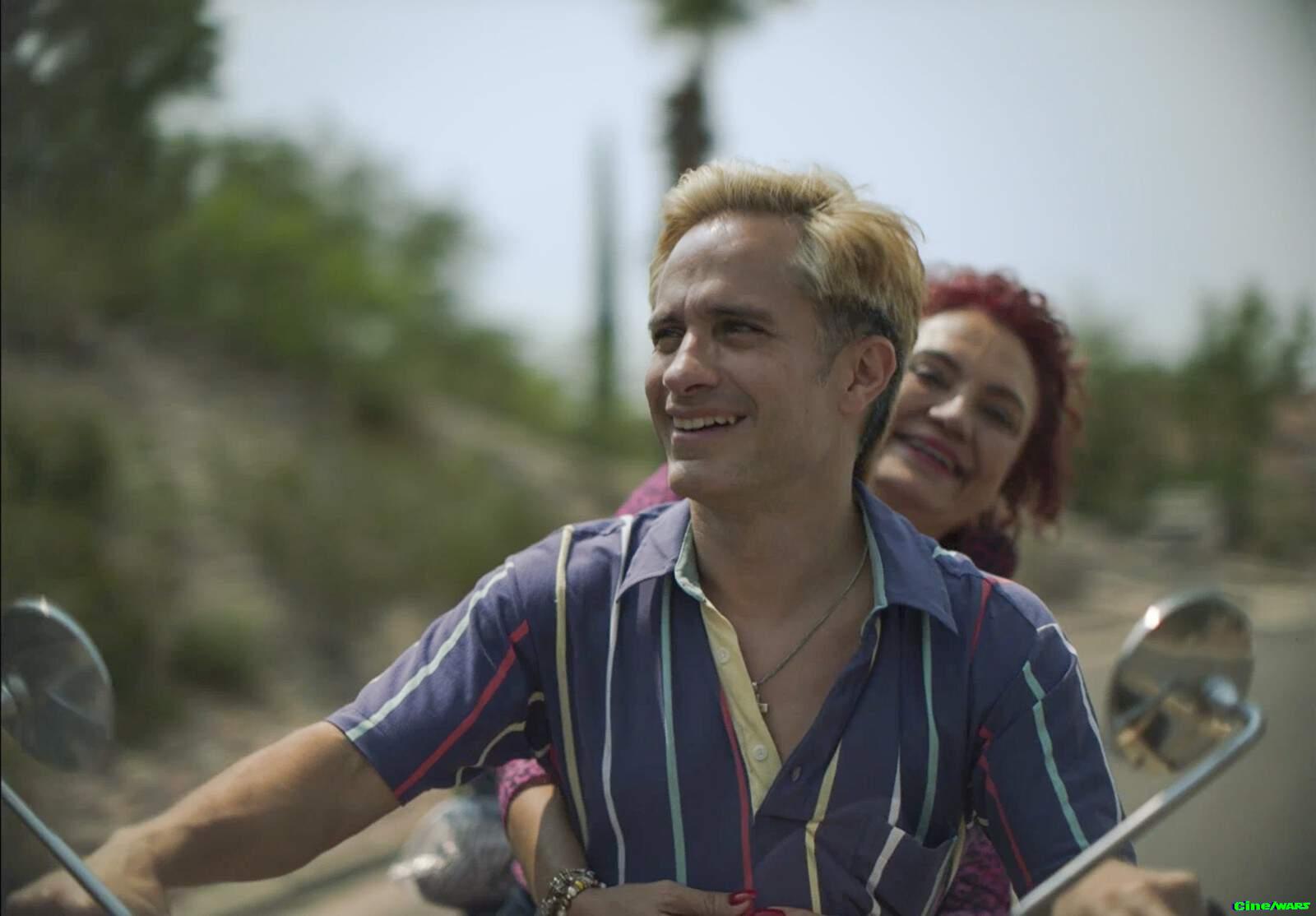

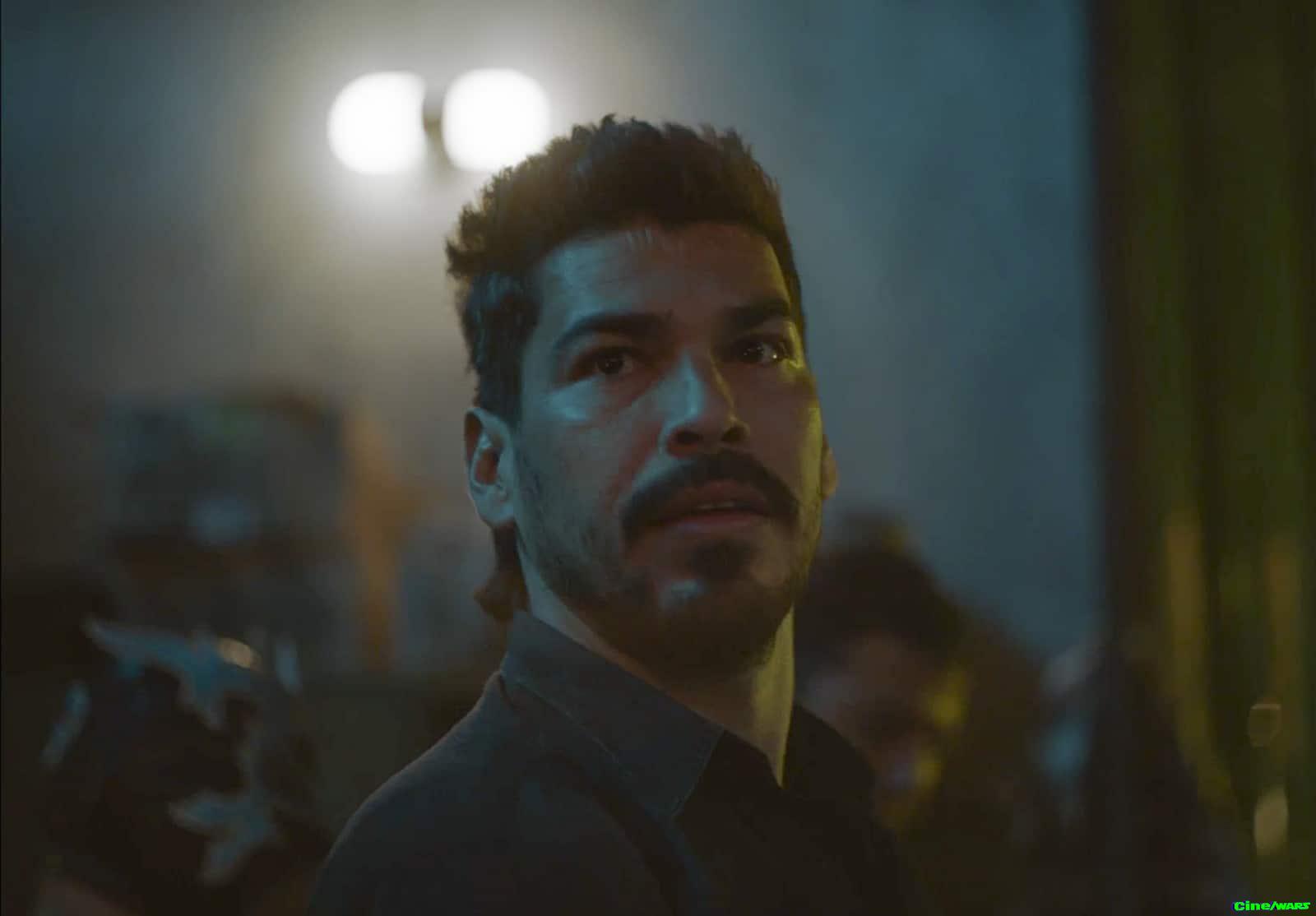
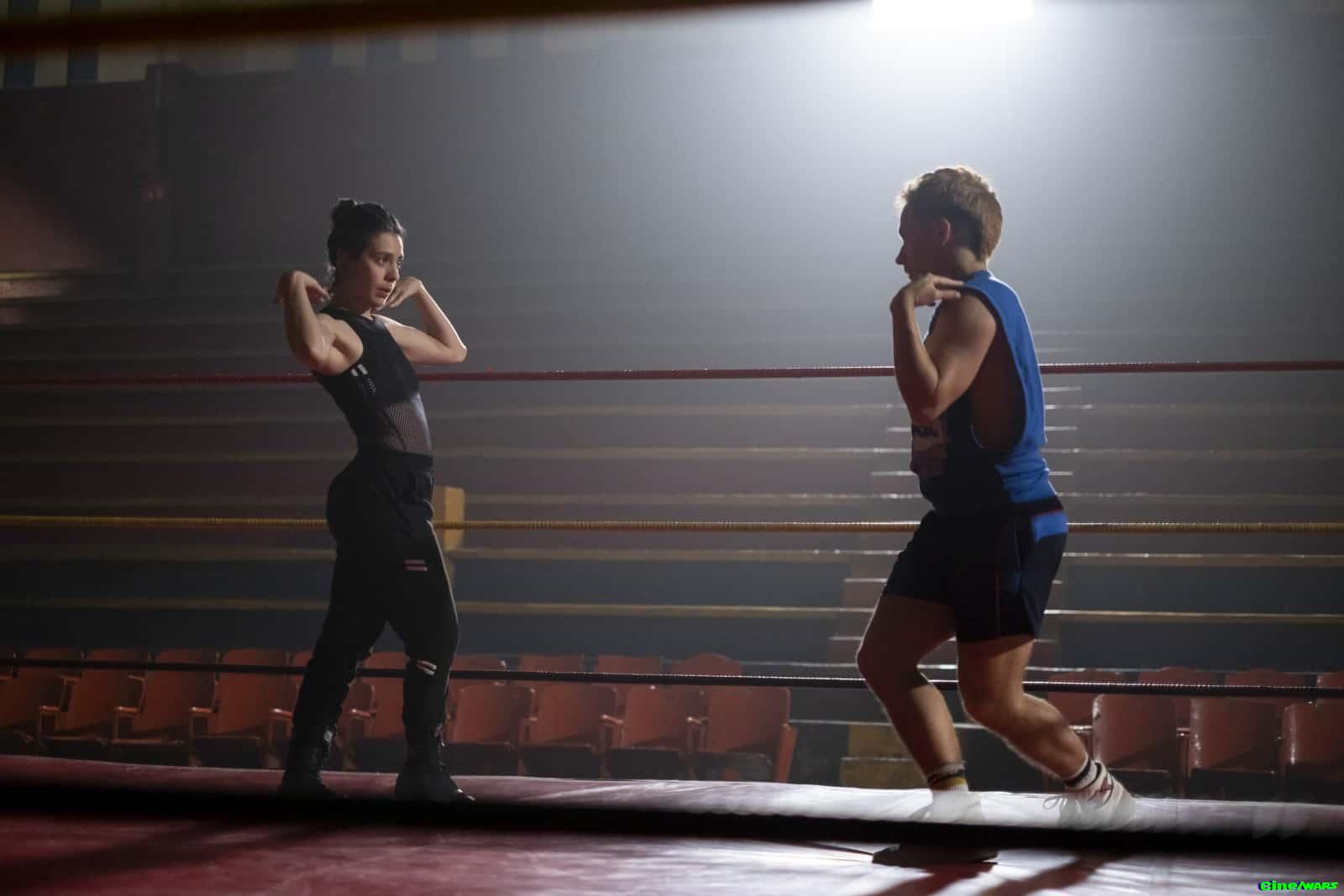


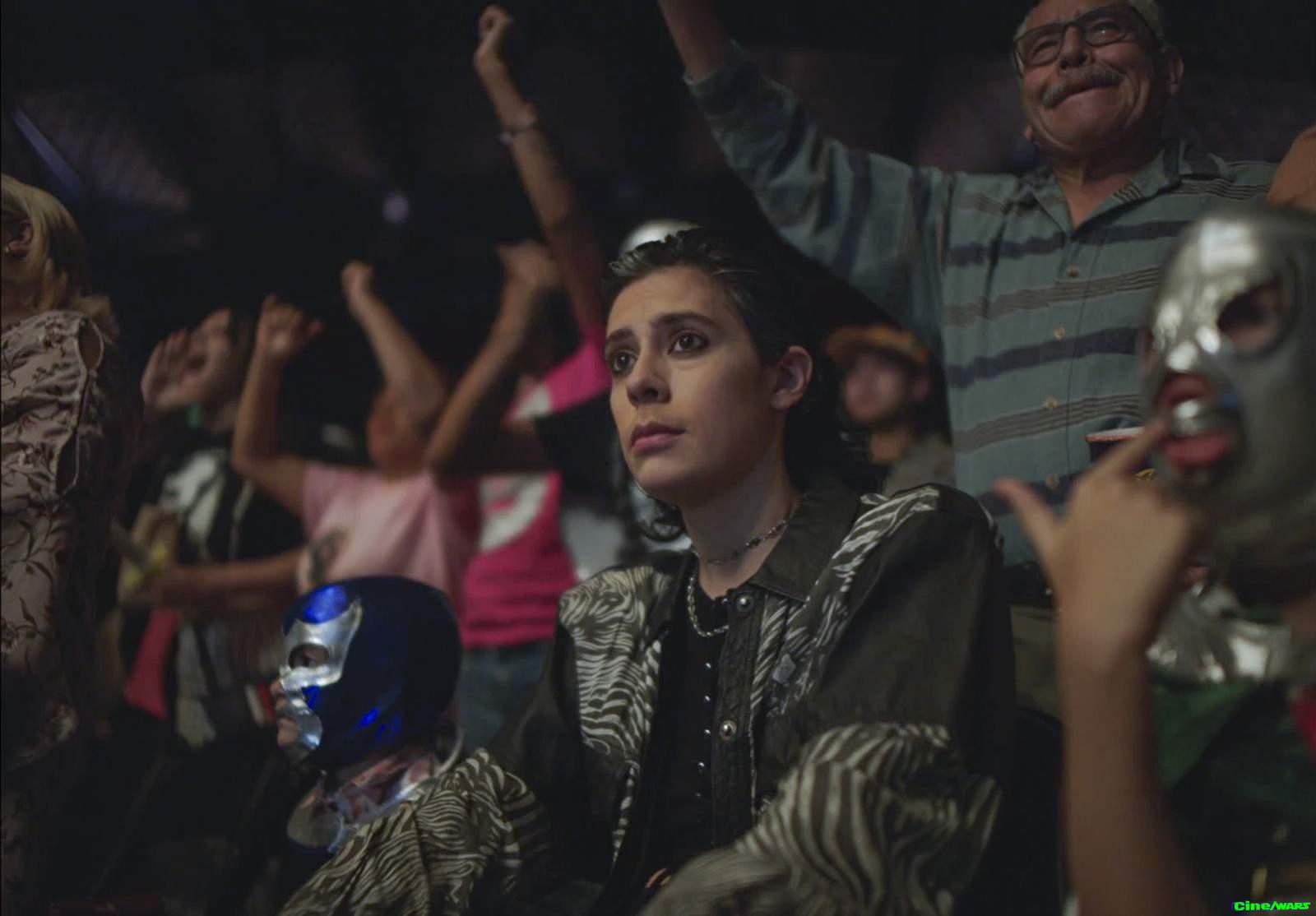


LONG SYNOPSIS
When Saúl Armendáriz (Gael García Bernal) starts competing in the macho world of Mexican Lucha Libre wrestling in the late 80s, he refuses to do it as a drag exótico wrestler. But after he meets Sabrina (Roberta Colindrez), Saúl gains not only a professional trainer but also a friend who, slowly but surely, helps him find the courage to go through a transformation to come out as he truly is, in and out of the ring.
After a lot of hardship, he creates ‘Cassandro,’ an openly gay exótico wrestler and an improbable hero with weary skill and pride, that also empowers Saúl to change how he sees himself and provides him with a purpose in life.
Cassandro is directed by Oscar and Emmy-winning filmmaker Roger Ross Williams (Music by Prudence, Life, Animated, “High on the Hog”), from a screenplay by Williams and Emmy-winner David Teague (Cutie and the Boxer, Life, Animated). The film stars Golden Globe winner Gael García
Bernal (“Mozart in the Jungle”, Old, Babel, The Motorcycle Diaries, The Bad Education), Roberta Colindrez (Tony award winning musical Fun Home, “I Love Dick”, “Mrs. America”, “Vida”, “The Deuce”), Perla de la Rosa (Villa, the Itinerary of a Passion, A Thousand Clouds of Peace), Joaquín Cosío (“Gentefied”, “Narcos: México”, The Suicide Squad), and Raúl Castillo (Army of the Dead, Knives Out, “Vida”). With special appearances by Benito Antonio Martínez Ocasio (Bullet Train) and El Hijo del Santo.
Producers are Gerardo Gatica (Museo, I’m no longer there, Tell me when), Todd Black (Being the Ricardos, Ma Rainey’s Black Bottom), David Bloomfield (Being the Ricardos, The Equalizer, Knowing), Ted
Hope, Julie Goldman (One Child Nation, Life, Animated). Executive producers are Gael García Bernal, Paula Amor, Mariana Rodríguez Cabarga, A. Müffelmann, Matías Penachino, David Teague, Jason Blumenthal and Steve Tisch.
The team behind the camera includes composer Marcelo Zarvos (Wonder, Fences, Enough Said); costume designer Mariestela Fernández (“Narcos”, “Narcos: México”, The Romantic Barber, César Chavez); editors Affonso Gonçalves, ACE (Don’t Worry Darling, The Lost Daughter, Wonderstruck, Carol), Yibrán Asuad, AMEE (A Cop Movie, I’m Not Longer There, Bayonet, Museo) Sabine Hoffman, ACE; production designer J.C. Molina (Honey Boy, Lemonade); director of photography Matías Penachino (Opus Zero, Halley, Time Share); makeup designer Itzel Peña (Güeros, Museo).
Amazon Studios, La Corriente Del Golfo, Escape Artists, Grand Illusion, Motto Pictures Presents Cassandro, which debuted at the Sundance Film Festival, on January 20 2023. Cassandro is in select U.S. theaters September 15, available on Prime Video Mexico September 20, and available on Prime Video globally September 22.
DIRECTOR’S STATEMENT
This journey started five years ago, when I met Cassandro because I directed a documentary about him, The Man Without a Mask, for The New Yorker series on Prime Video. I didn’t know much about Mexican Lucha Libre, as is likely the case for most people from the U.S. With my crew, I flew down to El Paso, Texas, and met Cassandro. From the first day, I was just blown away by his inner spirit and joy. He has an aura, a light; he is filled with this positivity and has struggled so much, and I was very moved.
That night in El Paso, we went to a tequila bar after shooting, and I told them, “this is my first fiction film.” Also, from the beginning as we were writing the script, I thought only one person could play Cassandro, and that was Gael García Bernal.
I know every production has obstacles, but we had significant challenges to overcome – from COVID to 100-degree shoot days – and we thought this project was dead many times. It’s a miracle we got here, but when it comes to stories that deserve to be shared with the widest possible audience, Cassandro’s is among the most worthy.
Building the script was a long and interesting process I went through with David Teague. As a documentarian, I wanted to stay true to the real Cassandro, and his story was so complex, complicated, and fascinating, with so many twists and turns that we had to pare it down. The story had everything in it, including, of course, the crazy world of Lucha Libre. Cassandro went through rejection for so many years and had this sort of need to prove himself to the world. He has something to prove to everyone. And he loses everything and realizes that it’s serving a bigger purpose of being inspiring to young gay kids, giving him much more satisfaction and much more purpose in life than serving himself. We made it a very profoundly personal emotional story.
True to the spirit of Saúl, a larger than life Mexican-American icon, this film wouldn’t have been possible without all of our collaborators on both sides of the border, who generously brought their own experiences, insights and perspectives to this incredibly rich story. That partnership helped make this a truly universal story – one that I think people will identify with it because no one feels like they’re on top of the world and they’re the best. Many of us feel like outsiders, and everyone has experienced rejection, alienation, and loneliness… that Cassandro has also experienced.
I want audiences to go on a journey where they will laugh and, hopefully, cry. It’s like an emotional rollercoaster, from joy to sadness. It will be a fun ride because of Mexican Lucha Libre’s very entertaining, colorful world.
I want Cassandro to be a fantastic experience for international audiences to discover this world and its complexity through this absolutely fascinating character.
I’m truly excited for everyone to see it.
— Roger Ross Williams
ABOUT THE PRODUCTION
“That’s the magic of Lucha Libre. There isn’t any audience like it.
You give them an honest show, and they’ll give you their heart and faith.
We’re doing theatre, but there are no lies.”
While Cassandro presents as an emotional story that immerses us into the macho world of Mexican Lucha Libre of the late 80s and early 90s —with all the thrill and decadence of the times— for filmmaker Roger Ross Williams, the immediate draw was the chance to investigate the underlying story and themes of an individual. The opportunity to explore a man’s story with a focused gaze and shifted viewpoint drove him to develop the project, write the script alongside friend and collaborator David Teague, and direct it.
The director/writer remembers what made him genuinely eager to dive into helming the project, “I met Cassandro when I made a documentary about him for The New Yorker series on Prime Video. The first day we met, I was just blown away by his sort of inner spirit, inner joy. I thought he was this person filled with this sort of positivity and had struggled so much, and I was very moved. That night in El Paso, we went to a Tequila bar after shooting, and I said to my crew, to my DP, ‘This is my first fiction film.’ I said, and then we started casting, you know, we started, we’re drinking tequilas, and we started.”
Screenwriter David Teague relates, “The origins of the film came from director Roger Ross Williams —about five years ago now— directed a short film about Cassandro. At the time, I was working with him as an editor on a documentary he was directing. And he told me, right after returning from El Paso, ‘This is an incredible fiction film, and I would love to pursue this.’ So, that was the very beginning of it. And because we had just come off this other film, Life Animated, and we really had a great creative collaboration… this fiction film based on Saúl ‘Cassandro’ Armendáriz true story would be a fantastic new collaboration and film.”
Producer Todd Black recalls, “I’d seen Roger’s documentary Life, Animated and found the story fascinating. Shortly after that, Roger’s agent asked me if I would be interested in sitting down with Roger to hear about his next project, Cassandro. After hearing from Roger and his writing partner David Teague I was incredibly intrigued, and said ‘yes, I would love to produce it.’ We then met with producer Ted Hope and the team at Amazon. I supported Roger with notes and suggestions through the first draft’s development. Once we had a solid script we then started to put the film together with a crew and cast…etc.” Once he started casting and prepping the film, Todd brought in his partner David Bloomfield to help support the process. They both got deeply involved in the process of post-production, in order to ensure the film was ready for audiences, working closely with the editor and composer…etc.
Williams also came across producer Ted Hope, who helped get this film through in the beginning and considered the kick-start of the project when Ross pitched the idea of adapting a short documentary that he had made for Amazon Studios into a feature film. “He told Cassandro’s story. I haven’t seen the short yet, but I just heard the words: one of the first heroic Lucha Libre Mexican gay exótico wrestler who wins, right? It was like, ‘I think that’d make a great movie, you know.’ So everything began in that meeting. I didn’t know then —Roger’d told me later— that it was the first time he pitched the idea. Like they were about ready to go around, they came into us first. I heard it. You know, it’s interesting as a fan of Roger’s movies. I started seeing themes in there. And I think you can look at his movies and see the theme of someone needing to tell this story, how they learned to tell it. This film is essentially the story of Cassandro. How do you find your authentic self ? How do we have somebody see us, hear us, and relate with us in a way that’s true to us? You know, it’s interesting that’s been in a story in his work, and it’s ultimately perhaps the movie’s underlying theme, too. That path from taking off the mask from the role that society demands us to play, and finding our true self, our authentic self, and actually learning how to play that role. It felt to me from his prior work it was a perfect story for him to tell.”
After having Amazon’s interest, Williams immediately turned to Teague, who, equally inspired by the heart of Cassandro’s premise, worked with the director, outlining the script into a very intimate and emotional story —Cassandro’s real-life struggle— and built everything else from the ground up. “We started, this was in 2016, by putting together a treatment. It was an amazing mix of documentarian mentality, where there’s a real character, a real person, the wealth of his story, and all of Cassandro’s videos, photos of his fights, and his life. He had an incredible collection of photos and material. So we had that archival treasure trove to pull from at the very beginning, and Saúl sent
us all his pictures. So, while we were developing the treatment for the film, we just inundated ourselves, especially with these photos, which were cinematic already,” explains Teague.
Saúl Armendáriz grew up in double cities: El Paso, Texas, and Ciudad Juárez, Mexico. Born in El Paso, he lived on both sides of the border, geographically and personally: being Saúl and Cassandro, going back and forth from one city to the other. But the connecting bridge was Saúl’s love for Lucha Libre. To create that particular contrasting universe, Williams leans heavily into the visual appeal of the traditional luchadores and the exóticos. He recalls, “I didn’t know much more about Lucha Libre than most people from the U.S. Whenever I tell someone in the U.S. I’m making a film about Lucha Libre, they’re like, ‘Oh, Nacho Libre.’ That’s the only reference they have. So this will be an amazing experience for audiences outside of Mexico to really discover this world and the complexity of this world through this absolutely fascinating character. There have been many documentaries about Cassandro, but I haven’t seen anything in fiction to create this world. We have this very entertaining and colorful world of Lucha Libre which for Mexicans is very familiar, but not for the international community. I don’t know if they’ve seen Lucha Libre quite this way.”
Motto Pictures’ producer Julie Goldman recalls, “What happened, basically, is that we did the short on Saúl for The New Yorker Presents on Amazon. And Roger connected so deeply with Saúl for many reasons… so he went to Saúl and said, ‘I want an option to make a film about your life.’ He could do that, and then we thought the perfect place was where the short lived, which was Amazon. We went to pitch it to people who are no longer at Amazon for many years because it’s just a long time ago, so it’s been a long process. Roger and David Teague —an amazing editor and a wonderful writer— came together to write the screenplay, which also took some time, but it was like step by step to get here. Once Gael signed on, it propelled the project forward, and in the end, Gael’s company, La Corriente del Golfo, came on to produce the film. The idea was to make the film in Mexico. Originally it was more in English in El Paso, then the script evolved, and it became much more of a story set in Mexico with some of the scenes in El Paso, so it changed as it went.”
La Corriente del Golfo CEO, Paula Amor, recalls, “It’s been quite a journey because, in the beginning, La Corriente had a small participation in the project. The pandemic came, Amazon paused the production, and we found ourselves conversing with Julie, Roger, Gael, and Mariana with Ted to make the project live. It was then that we decided La Corriente would make the production happen. Cassandro, in real life, has a very, very powerful story. His force just caught me, not only as the character but also as the whole context. The script reflects that splendidly.”
For Mexican producer Gerardo Gatica, the experience was equally thrilling. “After reading the script, I started doing some work and research to understand deeper where Lucha Libre comes from, what it means to Mexico, what it means to its people and audiences, and what it represents to culture. I talked with cinematographer Matías Penachino, with production designer J.C. Molina, and with all the cast and crew so we could better understand the world we were creating and avoid portraying a narrowed approach from a perspective based only on what we read. What we learned was not translated into words in the script, so in a very impressive effort, the whole team entered the project from the first day of shooting with a total understanding —or, at least, to the best of our knowledge— about the world we were creating.” Not only did the research fuel the development and creation of the world of Cassandro, but it also proved a valuable tool to jumpstart character building. All the cast and crew were prepared with reference materials and a solid background to visit from the first day of shooting.
CASTING
“You are beautiful, Cassandro.”
If there was one thing Roger Ross Williams knew from that moment the journey of Cassandro started —in that tequila bar in El Paso— it was that Gael García Bernal must play Saúl/Cassandro. “I thought only one person could play Cassandro, and it was Gael García Bernal… And that was where it all was born. We went to shoot The New Yorker episode the next day, and I said to Saúl, ‘I’m going to make a movie about you, but it’s going to be a fiction film.’ And he was like, ‘Great, let’s do it, let’s do it.’ So that started the journey.”
Impressed by Gael’s actor range Williams inquired about his availability. He wanted Gael to portray his hero: one of the first gay Lucha Libre wrestlers taken seriously and who becomes the first exótico to win a world championship and rise to international stardom. The provocative, relatable themes of the project raised García’s interest: “This project started classically, through agents, representatives. I read the script, and when I started digging into Cassandro’s life and his journey, the dramatic arc, and the transformation Saúl goes through to create Cassandro, I got excited; I said, ‘I’m doing this.’ The script had all the elements that made the story a necessity for me to want to do it, that contradiction to be a tough wrestler and, at the same time, openly gay, openly playing the part of the exóticos.”
The closest person to Saúl is Yocasta, his mother, played by Perla de la Rosa. She recalls her first impressions after reading the script for the first time, “I fell in love. I was not cast yet, but I saw a great opportunity to build a magnificent character that can be endearing. It made me wish with all
my soul to be in the movie. I thought it was a beautiful script, with endearing relationships, and that recovers the world of wrestling all Mexican kids were in contact with at some point, that wonderful world.” Perla was born and raised in Ciudad Juárez; though she has never delved into Cassandro, the character, she has always been familiar with the exóticos. “I had read about Baby Sharon and Greco ‘The Beautiful’. Everything with a tone of mockery because of being exóticos. Back in the late 80s, they were disrespected as gays, but, at the same time, there was a lot of curiosity about those wrestlers with those names (like ‘Baby Sharon’) and the way they moved and dressed. Now that I had the opportunity to get to know Cassandro through the script, I think he was beyond everything I knew about Baby Sharon, who initiated the movement. But Cassandro arrives and disrupts the scene because he opens up fully and makes a show about it with his unique personality, which I interpret as screaming, ‘Here I am’ to the world. I talked about this once with the director. I told him that, for me, it was like the story of the ugly duckling but in wrestling. Cassandro suddenly spreads his wings and shows up as a peacock. He creates an extraordinary character with a strong statement: Here I am, and screw you. I loved that.” Initially, Perla was not considering participating in Yocasta’s casting. Still, when an acquaintance advised her to do it, she went to a friend’s house —a Lucha Libre wrestler, Goddess of the Ring— to get help to dress up as the character required. “A friend painted a lot of tattoos on me, did a heavy makeup look, and I wore some fake red bangs I bought there for 10 dollars. It seems that the director liked it because I got the part!”
What Williams recalls of Perla’s tape was definitive. “I saw Perla’s self-tape, and she truly went for it. With a red wig on and someone playing Saúl, she really went for her scenes. There was an authenticity in her. Later I learned that she is actually from Juárez and that she had several stories about her very similar to Yocasta’s life. I think her mother worked as a maid crossing the border every day to work in El Paso in the rich white people’s homes. My mother was a maid, so we connected, and I just felt that she embodied Yocasta on so many levels. It was a done deal for me.”
Another key character that helped Saúl find the courage to go through a transformation road to come out as he truly is, in and out of the ring, is Sabrina. Williams explains his process to cast Sabrina: “I was in the van with J.C., Matías, and Carlos when Gerardo, the producer, called and said I should look at Roberta’s audition tape. So I did, and we started crying. We were just blown away by how she embodied Sabrina”
On her side, Roberta recalls the process as delightful. “My first reaction was thinking how great a role this was for Gael to transform himself. Also, for Roger Ross Williams, who was making his first fiction feature. I watched his Academy Award-winning documentary and read about his
background of being bullied as a gay young man and a child. I thought there were some parallelisms. Then I dug deeper and saw the documentary, Cassandro, The Exotico!. Now, I think I’ve seen it about seven times. Reading the script was really important for me. Reading a story about this world for the first time was beautiful. Growing up in the United States, you have few references for what’s happening in the Mexican culture —aside from the news. There’s no opportunity to see a celebration of culture, and there’s nothing that quite celebrates Lucha Libre.”
Colindrez saw in Sabrina an opportunity to portray a strong and colorful character. “Sabrina is a wrestler that meets Saúl and sees an incredible amount of talent in him. She also sees a person who needs a lot of guidance to become who she senses he wants to become. Almost immediately, she feels his need for her and, somehow, the other way around. It is through her joie de vivre that Sabrina can see him become who he truly is. She agrees to become his trainer, mentor, ally… to be kind of his biggest advocate and champion, so he can finally see himself as Cassandro. I love their chemistry together. I love the level of sympathy she has for him, how she cares, and how committed she is to him, not only as Saúl but as Cassandro. She’s a great friend to him throughout his path to becoming Cassandro. It is a story of evolution: overcoming oppression and finding the strength to overcome something that could appear daunting and unavoidable. Cassandro tells the journey of finding oneself and, in the process, losing oneself a little in the contrasts of what we think we are and what we want to be. Sometimes one’s nature could clash with one’s aspirations.”
For the rest of the characters in Saúl’s world, Williams had the time to put together a magnificent cast. He extends, “I never understood why directors always say casting is 90% of directing, but now I know it is true. You cast the right people. You cast the right actors; they understand and know the characters and go with it. They make it their own. They’ve, all of them, all of the actors, made the characters their own. And they brought something very personal to it.”
To cast Gerardo, Saúl’s first love interest, Williams shares how he determined the actor Raúl Castillo was right for the role: “I connected with him through a good friend, Jeremiah Zagar, who worked with Castillo while directing We the Animals. Jeremiah read the script and told me I got to meet Raúl. I saw Jeremiah’s film and met Raúl… he was Gerardo. He played the role in the Sundance Lab I went to. You’re not supposed to use the same actors in the lab as in your real film because you’re experimenting and making mistakes. You can’t really make mistakes when you’re actually shooting the film. But for me, there was no other way. Raúl was playing Gerardo. I mean, he’s incredible.”
As Castillo read one of the earliest drafts of the script (Summer 2018), he was intrigued by the story from the beginning. “I saw Roger’s The New Yorker piece about Saúl, and I was immediately intrigued. I found the documentary fascinating and Saúl a fascinating subject. I read an early draft of the script, and I love the character of Gerardo as much as I loved the character of Saúl and the whole world that Roger and David were depicting. So, I was excited about this story being out in the world.
“First and foremost, I am fascinated by Roger’s career as a documentarian, and I was excited for him to transition to narrative film, and I thought this was a great subject to do it. I was fascinated with the idea of Roger, as an African-American gay man, being interested in this Mexican-American border story. I thought he brought a really fresh perspective as an outsider, but an insider in a sense.” “Secondly, the prospect of working with Gael was thrilling to me. And even more important
than both was telling a border story. I’m from the U.S./Mexico border. I was born and raised in McAllen, Texas, and my family is from Reynosa, Tamaulipas. I’ve made it a mission since I started acting to tell stories about the border because it’s a fascinating world. Roger’s interest in this subject was inspiring because it’s not a world we frequently see in cinema or on screen.”
“It just keeps adding up that I find Saúl’s story incredibly fascinating. Its potential to be healing and telling a story about a gay man in the border world inspired me as an actor and storyteller. And then Gerardo, my character, was a fascinating character, so I was excited about bringing his story to life as well. He is full of contradictions. He’s not black & white, as lives in a zone of grays… which is not that uncommon, and he lives his life in a bit of secrecy. On the one hand, he’s a very proud father and even a proud husband. But his story of repressed sexuality is not that unusual. Gerardo lives in a very macho world, the same one he grew up in and where he’s come up. He doesn’t feel comfortable enough to live out his sexuality. So, he has to live it out in this very secretive way. And I do think that his relationship with Saúl is genuine. I believe he would’ve been an out man in another life, another world. But he is not, as he doesn’t feel it is possible, so he has to live on the down-low. He must express his sexuality under the radar. This relationship is an important part of Saúl’s story, and we were committed to portraying it with a great deal of care and empathy.”
For Castillo, his character portrays a very familiar story in a bicultural environment: It depicts life on the border between two countries as a metaphor for Gerardo’s two lives: the straight husband and father, and the gay lover. But in the end, Castillo sees Cassandro as a healing story. “At the end of the day, it is about healing a deep wound. I think homophobia is so rampant and common in our culture because it’s been the standard for so long. But I think that Saúl in his life has healed a lot of
that and shown us that we are more capable of love than we realize. People have been taught to be homophobic by society. But people don’t have that much hate in their hearts. When I watched Saúl in Roger’s documentary, in his public life, it was amazing how straight men love him. These luchadores, who are these macho straight guys, adore him. This story can heal. And that, to me, as an actor and artist, was very interesting.”
For the role of Lorenzo, Cassandro’s agent/booker, Williams chose a performer who holds a real gravity in his performances and bring a key element to the mix: the legendary Mexican actor Joaquín Cosío. He took the role as soon as he finished reading the script. “It is easy to identify a solid story just by reading the character’s dialogues. It is not an uncomplicated story to tell. It, apparently, is a biopic, but the plot has so many nuances and dramatic arcs; it depicts a world rarely seen on the big screen. In addition, the director gathered an excellent cast.”
“Lorenzo is an ambivalent human being, transcending the stereotype that a character like him could be. His conflicts go beyond those of a greedy businessman of the underworld. The story aspires to portray the inside of the fascinating Lucha Libre universe with vivid characters going through real struggles… Lorenzo is one of them.”
Cosío is not a stranger to Lucha Libre world. He regularly attended Ciudad Juárez scenes, though he never saw Cassandro in action. “Mexican Lucha Libre is full of extraordinary characters and a fascinating aura,” Cosío says. “The hand-made masks are unique and are intrinsically related to a Mexican pre-hispanic tradition of wearing masks. Mexican heroes exist, they are Lucha Libre wrestlers, and Cassandro is one of them. To begin with, he is beyond any stereotype that exóticos may have. Cassandro is a gladiator, a warrior who happens to be gay. Second, quoting Cassandro in the film, the spectacle does not reside in being gay or effeminate but in mastering the art of wrestling with rigor and discipline. And it is right there that this film scores a goal. The element of drama is Saúl/Cassandro’s affective relationships encircling the wrestling world.” About working with Roger Ross Williams, Cosío exchanged a few impressions about Lorenzo’s personality, “Roger left room for me to develop and unfold the character to flow organically. Of course, he expressed his point of view regarding some specific aspects but never imposed anything. From the casting to the production design and each aspect of this film, you can tell Cassandro is a transcendent and impactful project.”
For Cosío, working with Gael was a magnificent experience. “Gael is not only one of the most relevant actors internationally but a very creative and resourceful one, too. He knows how to create a convenient, relaxed, and fun atmosphere to work in that eases pressure. He created a
mesmerizing version of Cassandro with a manageable subtle exoticism. Gael provided the character with his intelligence and creativity to make a plausible and convincing Cassandro.”
Rounding out the cast is Benito Antonio Ocasio Martínez (a.k.a. Bad Bunny) as Felipe, an eager, charismatic young man assigned by Lorenzo to cover any Cassandro’s need. The Puerto Rican actor comments, “I’ve been a Lucha Libre fan since I was a little boy. It is one of the most relevant and influential forms of entertainment in the world, not only sport wise, but culturally speaking, too. However, I thought I knew who Cassandro was, because I’ve heard his name since I was a kid, but it was mind-blowing when I learned who he actually is, his back story, and what he has done.”
“My character, Felipe, is energetic and wants to escalate in life to become important. Far from being the only one who takes care of Saúl, Felipe grows in him to develop a special connection beyond work only. Playing Felipe was challenging, as it demanded a particular level of energy. I felt weird at some moments – it was clear what he meant for Saúl but for Felipe… I’m not sure. He remains something of a mystery, which is always exciting territory for an actor.” On the set, Ocasio was thrilled to work and learn from the whole cast of seasoned actors and, of course, García, “I wish I could have spent more time on set bonding, but in the end, I felt comfortable and confident. It was a definite privilege working along with stars like Gael and Joaquín and a director like Roger.”
One stellar aspect of the film is the guest appearances of Lucha Libre stars, such as Gigántico, Masked Massacre, El Mysterioso, and the national hero: El Hijo del Santo. Having acted in several movies, El Hijo del Santo was excited to have the opportunity to be in a film again. He comments: “The idea of coming back to making films caught me from the beginning. Also, I liked the script because Cassandro’s life is complicated. Beneath a mask behind a character, there is always a life full of obstacles, stumbles, and suffering. But despite all the struggle Cassandro has gone through, he has lived for his passion: being a Lucha Libre professional wrestler. We share that same passion, and I know that no matter how broken you are from the inside, how intense your headache is, or how upset you feel, you will always show up with a smile on your face, even beneath the mask, and nobody can see it. I’ve seen Cassandro having a hard time several times, but when he’s prepping for a show so carefully putting his makeup on and dressing up, I know he’s enjoying every moment of it.”
“The third reason why I took the project was working alongside Gael. Obviously, I admire him, and I got excited to recreate the encounter I had with Cassandro back in the past to defend my world championship. Back then, I didn’t give any space for Cassandro to be, to perform in his lively
style. For my scenes with Gael, I want him actually to wrestle, and I want Gael to perform the moves and holds properly.”
What does El Hijo del Santo hope audiences take away from the film? “I hope this movie gives people a different point of view of what wrestling is and how difficult it is to fulfill a dream. You must have perseverance and discipline to fulfill your dreams, believe in them, and fight for them so that if you get knocked down too many times, you can get back on track and continue. This film is a life lesson of how a young man who went through such adversities in life could achieve his dreams, stand out, and be happy.”
DESIGN AND EXECUTION
“The mask helps… but it doesn’t perform miracles.”
To create the alluring and contrasting world of Cassandro required an army of vast imaginations, and joining Roger Ross Williams was a sterling team of behind-the-camera talents: director of photography Matías Penachino; production designer J. C. Molina; costume designer Mariestela Fernández; and makeup artist Itzel Peña.
The film celebrates the beauty of our hero’s struggling journey, finding the courage to travel a transformative road to come out as he truly is, in and out of the ring.
While principal photography on Cassandro began in mid-2021, pre-production preparations for what the filmmaking team envisioned for Cassandro would start as early as 2018, with production designer J. C. Molina reading the script and becoming obsessed with the idea of making it happen. “I was sobbing when I read the script for the first time, and I felt so related that I obsessed over it. Before I even got the job, I hired someone to research and find references. I found myself with a couple of thousands of photographs, historical images. I didn’t even know if I would do the job.”
The first conversations Molina had with Williams were about that. “I had a beautiful conversation with Roger, and he showed genuine interest in hearing my point of view as a gay Catholic man raised by parents from Chihuahua. I connected so well with the story, and it was beautiful that Roger and I were creating with him trusting my input.”
With Honey Boy as his previous project, another personal film centered on a complex protagonist, J. C. took all the relevant aspects of the story to build the world surrounding the exóticos to highlight his actions. “The story is about Saúl, Lucha Libre, a group of exóticos that kind of infiltrated this very machista, hetero world. We started the research obsessed with Saúl, but then we learned about Pimpinela and other luchadores, so we thought of a way to embody it all and
put it all together in a single entity, intrinsic in the visual language we wanted to portray. Director of photography Matías [Penachino] and I wanted to create a beautiful film to see. My visual style is making the ugly, the reality, look beautiful, but also reflect the messiness of the Lucha Libre world, in colors and everything else, and make it stimulating. On the other hand, it was essential to making it timeless. Not modern, but neither too old.”
For Molina, finding suitable locations took a lot of work. “Finding a spot in Mexico City to recreate El Paso was hard. They don’t have lawns but tall fences for security reasons… and El Paso is one of the safest places in America. It took long scouting days and several modifications to get what I wanted.”
“To define each of Saúl’s micro-universes —where he lived with his mother, his social circles, his different career stages— Matías and I agreed to build ambiances with lighting design and specific use of colors. I have a BA in Lighting Design, so it’s easy and organic to incorporate it into the production design. I mean, it’s obvious those two elements go together but the level of obsession we were dealing with… We did a lot of camera tests with different color tones to reach our ideal. We envisioned a warm environment for Saúl and Yocasta’s house to portray intimacy and coziness. The curtains were yellowish; the walls had a particular kind of patina. It was challenging to depict Yocasta’s background as a strong woman with family issues but living a warm and loving home with her son.
“In contrast, the mood at the luchas is colder, more stressful… of course, you’ve got some warm light fixtures, but it feels more strident. We tried to recreate what Saúl told me about his early days in the rings. He said it was stressful and uncomfortable; it was him trying to find himself there and be comfortable with the places he was creating for himself. We intended to differentiate every set through light and color.”
Cassandro marks the first time J. C. Molina collaborates with costume designer Mariestela Fernández and director of photography Matías Penachino. While the three of them recall it as a memorable experience, Fernández comments, “When we met, we knew we understood we had a clear vision of the story we wanted to tell, so we started from a solid common ground trusting each other. We agreed to have a strong visual narrative playing with our elements, and when Gael came in, we created his character together. It was a blast.” This was also an unmissable chance to design Lucha Libre costumes and the perfect excuse to immerse herself into the exóticos world. “It was an exciting experience to get to know the exóticos’ world and a once-in-a-lifetime chance to design such an interesting life as Cassandro’s own. He is not only a wrestler but a gay man who accepts himself
as a luchador, a good one. Before him, there were only exóticos condemned to be defeated. It was through Cassandro and his talent wrestling that he got to win, in and out of the ring. Succeeding in life is accepting who you are and being brave enough to face yourself. That was the story Roger wanted to tell: one of a gay man confronting his fears and self-doubt to go and get what he wants in life: a great luchador. That is where I started creating.”
Fernández did not choose a color palette to define each wrestler’s personality. Instead, she felt inspired by the freedom of color offered by the Lucha Libre world. “It’s a universe with absolute freedom to create the wildest combinations. Obviously, we were careful when mixing prints and patterns, as luchadores have a copyright on their costumes. So we ought to explore a world apart. I let myself flow, so there’s not a single palette but an explosion of color. A dream for any designer.”
In contrast with that bliss, the most challenging moment for Fernández was creating the scene when Saúl was about to let Cassandro emerge. “Saúl is not quite an exótico yet, but he is determined to become the luchador he’s meant to be. So he goes into his mother’s closet to pick a few pieces and comes out at the ring while wrestling as a luchador, Cassandro, dressed in his mom’s clothes. It’s a defining outfit for the most relevant moment in the film – his debut as Cassandro. For me, it was coming out as a costume designer for Cassandro. The complexity came from walking a very thin line. We couldn’t make it too costumed or too overthought. It must be very natural, depicting the spark triggered by the calling you feel within, and you go and pick all the pieces, and it works perfectly. Despite the fact, Cassandro altered all those outfits in real life to make them fit him.”
When it came to the characters outside the ring, Mariestela followed a more realistic path, saying, “The film has a 90s flare, so we opted for the colors and the prints of that era, just to set a mood and not as a period piece. It is only a flare. I made each piece of Saúl’s wardrobe from scratch, turning them into a storytelling element. It was not about the clothes. Each costume tells a piece of Saúl/Cassandro’s story. Everything came naturally, and I had a world of options. Making Cassandro was fun and easy.” Yet, the level of complexity escalated when it came to dressing hundreds of extras attending the shows. Fernandez recalls, “I had all the support I needed to recreate the variety of atmospheres in which Saúl/Cassandro transits. To highlight their contrasts, I researched Ciudad Juárez, El Paso, and life on the border. We watch out for where, when, and how to use cowboy gear. Luckily, Mexico City has a wide variety of flea markets, second-hand shops, vintage stores, and clothes rental houses we scouted. For more specific outfits, we had an army of sewists and tailors making what we couldn’t find. We used all the resources in hand.”
The essence Fernández saw to create the alluring and sensual world of Cassandro, wrapped in a multilayered and nuanced dramatic arc, was honesty. “It is a sincere and relevant story to tell —the one we all need right now, especially in this post-pandemic era. We need to tell stories about people who believe in themselves and overcome whatever is against them to be themselves, to find themselves. The level of honesty and depth of the script hooked me. The fact of being based on a real-life story that so many young people can relate to is priceless. It is a reminder to go out and find yourself and live true to yourself, not letting anything interfere, to stop you. Also depicting the several nuances of the mother and son. Beautiful.”
For the director of photography Matías Penachino, Cassandro represented an opportunity to be involved in a Mexican movie again, one about outsiders living on both sides of a border. Penachino comments, “I related with the border theme, with the personalities emerging when you cross one. The cross-over of making a Mexican film with an American director and with the songs of Juan Gabriel formed the most appealing combination. Not to mention the opportunity to immerse ourselves into the Lucha Libre world because I knew about Cassandro, but not about Pimpinela and the other exóticos. I loved the idea of Cassandro being a sort of gay wrestlers’ hero.”
Penachino negotiated with director Roger Ross Williams to use a 155 format to capture images as if they were portraits. “I let the idea sink in and started looking for medium format lenses. I stumbled upon the mini with full and open gates in 155, similar to a medium. I researched Panavision lenses, H series, with medium format lenses basis. They covered the sensor and the aspect… and that was it! If we were to shoot a film to portray a character, we would make it with lenses for portraits to get the closest approximation to the still photo mood. Instead of watching movies, I focused on looking for references in the still photo. I looked into Alex Webb’s work and a bunch of other authors I loved, as we would pay mini-homages to the border still photography. We settled on some rules while shooting, like the zero-horizon rule (no tilting) that obliged us to establish where the camera would stand to dress the rest. Despite the rules, Molina is so genius that he designed 360º sets. My connection with J. C. was unique, with flawless communication and understanding. Everything flowed so smoothly.”
To set the visual tone in the best interests of the era, Penachino benefitted from Molina’s extensive research and list of references, which included comprehensive days of scouting locations. “Instead of using a palette by periods, we decided to do it by sites. We were meticulously careful with art and props since we are talking about 40-year-old flashbacks! But, generally speaking, we look for timeless elements, places, and colors. We didn’t want anyone to be distracted by time leaps. Also, I
wanted to benefit from Roger’s documentarist style lighting-wise. I worked closely with Molina to distribute practicals all over when plausible/possible to homogenize mood with lighting.
“It was the use of light through the different wrestling arenas which also set the tone to present Saúl’s evolution from El Topo to Cassandro to his ultimate show,” says Penachino. “Lighting is a narrative resource to guide the audience through the character’s moment. The same happens with the color palette. Roger decided that Mexico City would be red-themed, and their home in El Paso would use warm tones. Being a biopic, nothing can distract you from the main character.”
FILMING AND POST
“Tell your friends you saw tonight a legend born.”
Anyone helming a production with as many moving parts as Cassandro would find the challenge daunting. For Gael García Bernal, producing and starring in the film provided multiple layers and facets, all requiring his undivided attention… a definite challenge he met head-on, but at first, he found one duty easier said than done (literally).
“Playing simultaneously in two arenas is as satisfactory as it is exhausting. I’ve done it before, and it made me realize that it just opens the possibility for me to see the project from different angles. It transmutes the way I relate to every new project and, as a producer, it allows me to make creative decisions for which an actor wouldn’t ordinarily be responsible. I feel responsible for inviting a bunch of people to come and take a risk on a project that might not do well, but one we believe in deeply. And life never happens flawlessly; there will always be a search, a journey… and that’s what I enjoy most. Cassandro is a collective exploration to make a great movie, telling an amazing story. I hope Cassandro transcends the outstanding experience of making it. I wish the story resonates so loud that Saúl/Cassandro’s heroic act of diving into the ring of life impacts and reminds people of what truly matters.”
Mexican producer Gerardo Gatica shares his experience of making this film happen: “Cassandro is a film about identity mainly. The story has a lot of elements and layers, such as the, of course, Lucha Libre. But for me, it’s more a film about self-respect, acceptance, love, emotion, and identity. Cassandro is also about accepting who we are, and the masks we wear while living our lives, and trying to… sometimes to portray something we are not, or that a society doesn’t expect from us. I think about Saúl Armendáriz life… his real life… in the Saúl of our film, Cassandro is not the mask but the other way around. Cassandro is like the true self, and the character, ‘Cassandro’ the wrestler is when Saúl feels freer and happier about himself.”
The biggest challenge he faced as a producer was, “Actually, stepping up to the occasion. I teamed up with some producers that I admire: Ted Hope, Todd Black, Julie Goldman… they were absolute legends, and getting to lead the production from the Mexican side represented an incredible challenge for me. Of course, it was stressful, but I am very proud that I got to work with them, and the amazing team of executives at Amazon Studios who have been extremely supportive, who trusted me, and the team. I’m certain that Cassandro won’t disappoint.”
For David Teague, the biggest challenge was developing the story and narrowing the possibilities to strike the right narrative balance in the script. “There were so many parts of Cassandro’s story you could tell, there were so many themes, and that gets incredibly overwhelming, and then you end up with a script or story with too many ideas. Finding that focus and trusting the material to understand where to go was overwhelmingly hard. I guess that’s the reason why it takes so many years to develop a script. We always had Cassandro, and we knew his story was amazing… but there were moments early on when we wondered, ‘Will we do his legacy justice? Will we do his story justice?’ Because it deserves an incredible film made from his life, I think that was the most challenging part. But what I most want people to take away from the film is: Cassandro is a film that, when I was growing up, I wish I had seen. I hope it shakes people up and breaks them out a little bit of narrow, rigid ideas, especially what it means to be a man.”
“I hope the film shows people how limiting it is to have these narrow ideas about what someone should be and judge people for that, hurting people for that. I hope that when people see the film, they also know that finding oneself is an incredibly messy process; people have flaws, and coming to terms with your identity is not just a simple arc of triumph over adversity.”
The experience of producing a film in Mexico was a new one for Ted Hope. “Every movie is a story of climbing many mountains with many false summits. You think you’re getting there. You think you’re on top and realize it’s just another mountain range you have to climb to get there. When I was an executive at Amazon, we had a different vision for this movie than what it ultimately became. We were originally going to shoot in the U.S. We were going to make a film that was more in English. But the realities of this business didn’t fully align with the movie we wanted to make. So you keep looking for new ways to build the film that aligns with your creative vision. Luckily, Gael and Paula Amor came into the picture at a serendipitous moment, and it became a Mexican production. We found a better way to make the movie with a better team that empowered the whole collaboration in a new way.
“Any time you can deliver a unique, distinct, specific, authentic experience, it becomes universal. Any time you deliver truly intimate, authentic content, it becomes a spectacle. It touches us in ways that we never expected. I think any time we encounter a world that we’re not used to seeing and feeling the truth from that, it also changes us. So, for me, one of the themes in movies that I’ve always loved is the transformative power of art, and I think that here we see the transformative power of sport, of a sport that is elevated to a level of art by its practitioners, the Luchadors.”
Executive producer and La Corriente del Golfo CEO Paula Amor expects audiences to feel the love this movie was made with. “Cassandro is an endearing character with a story focused on the relevance of letting ourselves be. Because when we are respectful of who we are, great things happen. I expect the takeaway for anyone who sees this film is to connect with the story. Not only because of wrestling world but because of the human component in a profound story with complex
—but incredibly passionate— characters who manage to have fun, too.”
ABOUT THE CAST
GAEL GARCÍA BERNAL (Saúl Armendáriz | ‘Cassandro’) is an award-winning actor, producer, and director. He gained critical acclaim and a Golden Globe award for Best Actor in a Comedy Series for his role in Amazon’s “Mozart in the Jungle” in 2016, with the show winning a Golden Globe for Best Comedy Series. In 2017, Bernal received an additional Golden Globe nomination for Best Actor in a Comedy Series for his role in the second season. In 2016, Time magazine named him in the annual Time 100 most influential people list. In 2020, The New York Times ranked him No. 25 in its list of the 25 Greatest Actors of the 21st Century.
Bernal has starred in countless films, including the globally celebrated feature Alfonso Cuaron’s Academy Award-nominated Y tu mamá también (2001) and The Motorcycle Diaries (2004), for which he received a BAFTA and Satellite Award nomination in 2005 for Best Actor. In 2006, BAFTA nominated Bernal in the Rising Star category, acknowledging new talent in the acting industry.
His additional film credits include Rosewater (2014), Ardor (2014), Desierto (2015), and Neruda (2016), which earned Bernal the Best Actor in a Foreign Language Film at the Palm Springs Film Festival. The film was nominated for Golden Globe’s Best Motion Picture – Foreign Language in 2017. That same year, he voiced Héctor, the main character of the Academy Award-winning Pixar animated feature Coco (2017). Museo (2018), The Accused (2018), Netflix’s The Kindergarten Teacher (2018), Netflix’s Wasp Network (2020), Pablo Larraín’s Ema (2021), M. Night Shyamalan’s Old (2021), the HBOMax limited series “Station Eleven” (2021), and Marvel’s special Werewolf by Night (2022) currently streaming on Disney+.
Bernal is currently producing and starring in Hulu’s “La Máquina” (2022) alongside Diego Luna and Eiza Gonzalez, directed by Gabriel Ripstein. It will stream on Disney’s DTC platforms as a Hulu Original. He also starred in and produced Oscar-winning documentary director, Roger Ross Williams’ first narrative, Cassandro, which will debut at Sundance Film Festival 2023.
Besides his work in front of the camera, Bernal continues expanding his roles behind the scenes. Teaming with producing longtime friend and business partner Diego Luna, the duo founded La Corriente del Golfo, a Mexico City-based production company, to produce resonant, timely material designed to entertain and enlighten audiences. Initially drawing from the wealth of material created by a close-knit group of actors, writers, and directors, Bernal and Luna continuously seek to champion both emerging storytellers and established filmmakers alike. The result is a diverse slate of
projects, including the political thriller series “Aquí en la Tierra” (2018), Bernal’s second directed feature film, Chicuarotes (2019), and Netflix’s series “Everything Will Be Fine” (2021).
ROBERTA COLINDREZ (Sabrina) is a rising actress who made her off-Broadway debut in 2006, starring in “Too Much Light Makes the Baby Go Blind.” She subsequently appeared in several short films and regional theatrical productions, and in 2011, she wrote and starred in the movie Otis Under Sky. In 2013, she began playing Joan, a confident young lesbian, in the off-Broadway musical “Fun Home.” In 2015 it was nominated for seven Tony Awards, of which she won five. She has also made guest appearances on many television series, and her performance in “I Love Dick” as a gender-fluid performer.
In 2019, she joined the cast of the TV drama Latinx “Vida.” In 2020, she participated in the pilot episode of the Amazon Studios comedy “A League of Their Own,” based on the film about the history of women’s baseball teams that appeared during World War II that had been directed in 1992 by Penny Marshall.
Her film credits include a cameo in Alejandro G. Iñárritu’s Birdman or (The Unexpected Virtue of Ignorance), Ms. White Light (2019), Friends Like That (2020), and Unidentified Objects (2022).
PERLA DE LA ROSA (Yocasta) is a renowned actress with over four decades of uninterrupted work on stage, in films, and on television. The Mexican Academy of Motion Picture Arts and Sciences granted her the Ariel award in the category of Best Actress in 2004, for her role in A Thousand Clouds of Peace, by Julián Hernández. Her film credits include One’s Man Hero by Lance Hool, and Ave María, by Eduardo Rossoff.
As an on-stage director and playwright, De la Rosa has received multiple awards for her acting and directing work. She has also performed as a stage and costume designer.
Graduating from UNAM’s School of Dramatic Literature and Theatre in the faculty of Philosophy and Literature, De la Rosa also holds a MA in Culture and Literary Research.
Recently, De la Rosa received the Juan Ruiz de Alarcón National Playwriting Award 2022 for her outstanding career, granted by the Ministry of Culture and the National Institute of Fine Arts and Literature in Mexico.
JOAQUÍN COSÍO (Lorenzo) is an acclaimed Mexican actor with a filmography spanning over 45 feature films, including Quantum of Solace, Hell, and Savages. Joaquín´s most recent cinematic endeavor
took place in Los Angeles, California, where he appeared in the highly anticipated film The Suicide Squad, written and directed by James Gunn and produced by DC Films. Not limited to the silver screen, Joaquín has also made a significant impact on the small screen. He starred in the Netflix series “Gentefied” in Los Angeles, California, captivating audiences with his compelling portrayal.
Additionally, his remarkable role in the hit series “NARCOS Mexico” on Netflix has garnered him national and international recognition. Throughout his career, Joaquín has been honored with numerous awards. He was the recipient of the Ariel and Diosa De Plata awards in 2011 for Best Male Supporting Role in “El Infierno.” In addition to live-action roles, Joaquín Cosío has lent his voice to animated films, including Netflix’s Klaus, Spider-Man: Into the Spider-Verse, TED I and II, and Rango. His diverse range of talents extends beyond the boundaries of one medium, showcasing his versatility as an actor.
With a passion for storytelling and a commitment to his craft, Mr. Cosío continues to captivate audiences with his compelling performances, leaving an indelible mark in the world of cinema and television.
RAÚL CASTILLO (Gerardo) is an actor across the film, television, and theater mediums. He is best known for his portrayal of “Paps” in the critically acclaimed independent feature We the Animals, based on the Justin Torres novel of the same name and directed by Jeremiah Zagar, which brought him an Independent Spirit Award nomination; and for his starring role as Richie on the Michael Lannan-created groundbreaking HBO series “Looking,” which ran for two seasons before wrapping up with a telefilm. For his work on “Looking,” he earned the Lupe Award from the National Association of Latino Independent Producers (NALIP).
Castillo is currently seen in A24’s The Inspection as Marine drill instructor, ‘Rosales’, for which he received a Gotham Award nomination for Outstanding Supporting Performance. The Inspection is the narrative feature-film debut of filmmaker Elegance Bratton which world premiered at the 2022 Toronto International Film Festival and was a New York Film Festival Closing Night selection. Subsequently, he will soon be seen in Miguel Wants to Fight, directed by Oz Rodriguez, the upcoming feature film debut from Academy Award winner Roger Ross Williams’ Cassandro for Prime Video, and the upcoming FX limited series “Class of ’09”.
Castillo can be seen in Apple’s Sundance favorite from Cooper Raiff, Cha Cha Real Smooth, Peter Hedges’ The Same Storm, Jeremiah Zagar’s Netflix feature, Hustle, and Mattson Tomlin’s feature film debut, Mother/Android on Hulu. Additional film credits include Zack Snyder’s Army of the Dead
on Netflix, Adam Randall’s Night Teeth, Guy Ritchie’s Wrath of Man and Chad Hartigan’s Little Fish, Ricky Gervais’ Special Correspondents, Steven Soderbergh’s Unsane, the SXSW favorite Cold Weather, the laureled short film Limbo, El Chicano, Don’t Let Me Drown, My Best Day, The Girl, Permission, and Bless Me, Ultima.
Also a playwright Castillo is a proud member of the storied LAByrinth Theater Company in New York City. He authored the plays “Between You, Me and the Lampshade,” which premiered in April 2015 via Chicago’s Teatro Vista, and “Knives and Other Sharp Objects,” which premiered in 2009 at NYC’s Public Theater. His stage acting credits include productions of “Death and the Maiden” alongside Sandra Oh (at the Victory Gardens Theater), “Adoration of the Old Woman” (Intar), “Fish Men” (Goodman Theater/Teatro Vista), “A Lifetime Burning” (Primary Stages), and “School of the America”s (with LAByrinth at the Public Theater). He most recently starred on stage in New York Theater Workshop’s “american (tele)visions” — a progressive memory created by Victor I. Cazares and directed by Rubén Polendo.
Born and raised in McAllen, Texas, Castillo studied theater at Boston University’s School of Fine Arts. He currently resides in Brooklyn, New York.
ROBERT SALAS (Eduardo) has been acting on stage and screen and playing and composing songs since the 1970s. He took a 15-year hiatus from performing to raise his three children. He then returned to producing and directing theatre and appearing in indie film roles before playing the lead in the Off-Broadway musical, “My Name’s Not Indian Joe,” directed by Don Scardino. His following films are in post-production, including Family Portrait, directed by Lucy Kerr, and Close Your Eyes, directed by Zach Smith. He will lend his voice to Carlos in “Tech Heist” and Dr. Almas in “Argon,” both characters in two upcoming sci-fi podcasts.
EL HIJO DEL SANTO (Special Appearance) is a Mexican wrestler with a 40-year professional career in the ring who has continued his father’s legacy. El Santo, El Enmascarado de Plata was a legendary Mexican wrestler who popularized and elevated the sport over five decades and gained cult status throughout the globe, making Lucha libre a massive cultural phenomenon.
Born and raised in Mexico City, El Hijo del Santo has defended his mask on over sixty occasions in Central and South America, the Caribbean, Japan, the United States, and Europe. El Hijo del Santo has been an eight-time World Welterweight champion, three-time World Couples
champion, National Welterweight, Middleweight, and Trios champion. Currently, he is the IWC Legacy Universal champion and Honorary World Champion of WBC Welterweight.
Businessman, lecturer, and environmentalist, El HIjo del Santo holds a bachelor’s degree in Communication Sciences from the Universidad Iberoamericana. He has strongly supported ONGs such as Wild Coast/Costa Salvaje in their fight to defend the sea and endangered marine species and UNICEF in its battle for children, and CIMAB in support of women victims of breast cancer, among other non-profit organizations. He has been a six-time World Lightweight Champion.
At seven years old, he began acting in his father’s movies. El Hijo del Santo’s TV appearances include the “Viernes del Santo” show and “Experiences with El Hijo del Santo” on TVC Sports Channel. He has performed in five feature films and radio shows, including the latest XEW production, “Máscara contra Destino.”
He created the play “El Hijo del Santo sin máscara,” where he starred on-stage. He was a columnist for ‘Hablemos sin máscaras’ at Récord sports newspaper for seven years and three years for El Universal and El Gráfico newspapers.
El Hijo del Santo was the only one out of El Santo’s ten children who became a professional wrestler, gaining cult status in Mexico and Japan. His brand has been adapted across different mediums, from comic books to cartoons, and his work continues to influence the way sport intertwines with entertainment.
ABOUT THE FILMMAKERS
ROGER ROSS WILLIAMS (Director | Screenplay) is an Oscar, Emmy, Webby, Peabody, and NAACP Image award award-winning director, producer, and writer–and the first African American director to win an Academy Award®, with his film Music By Prudence. Williams directed Life, Animated, which won him the Sundance directing award and was nominated for an Academy Award, and won three Emmys. Williams is the recipient of the Career Achievement Award from the International Documentary Association, The Woodstock Film Festival Maverick Award, The NYU Alumni Achievement Award, and an honorary doctorate from Lafayette College.
His production company One Story Up produced the acclaimed food series “High On The Hog,” an adaptation of Ta Nehisi Coates’ Between The World and Me, the Ben Crump documentary Civil, the award-winning film Master of Light and Williams first scripted feature Cassandro for Amazon Prime Video which will World premiere at the 2023 Sundance Film Festival.
DAVID TEAGUE (Executive Producer | Screenplay) is an Emmy-winning documentary film editor and screenwriter. David wrote the script for the feature film Cassandro with director Roger Ross Williams, starring Gael García Bernal. He also wrote the script for the Emmy-nominated HBO special Between the World and Me, which he adapted for the screen from the book by Ta-Nehisi Coates. He is currently co-writing Florence from Ohio with director Stephanie Wang-Breal.
His work as a documentary editor includes the Oscar-nominated and Emmy-winning Life Animated, the Oscar-nominated and Emmy-winning Cutie and the Boxer, the Independent Spirit Award-nominated The Departure, the Emmy-nominated and Sundance-winning E-TEAM, and the Oscar-winning Freeheld. He was the supervising editor for Pretty Baby: Brooke Shields (Sundance 2023), for the Emmy-nominated Becoming, based on Michelle Obama’s memoir, and he was the story consultant for Taylor Swift: Miss Americana.
Other work includes two Oscar-nominated shorts (Mondays at Racine, Sun Come Up), Critics Choice-nominated Spaceship Earth, doc series The Deep End, and the Independent Spirit Award-nominated The Cage Fighter. As a consulting editor, he worked on American Factory, Knock Down the House, Crip Camp, Cameraperson, Welcome to Chechnya, Free Chol Soo Lee, Mayor, Bitterbrush, When Lambs Become Lions, The Reagan Show, and Athlete A. David has served as a story advisor and mentor with the Gotham/IFP Documentary Labs, the Karen Schmeer Film Editing Fellowship, the Tribeca Film Institute Doc Program, the Catapult & True/False Rough Cut Retreat, the FRONTLINE/Firelight Fellowship, the Brown Girls Doc Mafia Feedback Loop Program, and the Sundance Institute CNEX Documentary Lab in China. He has served on the jury at Full Frame and the Woodstock Film Festival and has taught or guest lectured at Columbia University, DCTV, UnionDocs, Points North Forum, Long Island University, the Manhattan Edit Workshop, Brooklyn College, and the New School.
SAÚL ARMENDÁRIZ/CASSANDRO (Real-Life Subject | Consultant) is a world-renowned wrestler and winner of several world titles. He is also an activist fighting for vulnerable groups’ rights.
Cassandro was born Saúl Armendáriz in El Paso, Texas, just over the border from Ciudad Juarez, Mexico. As a teenager, Saúl spent most of his free time on the Mexican side of the river, watching Lucha libre matches. Neither side of the bridge was a great place to grow up gay. Saúl quit school at 15 and apprenticed himself to a Lucha libre trainer in Juárez. The first character he
inhabited in the ring was a rudo called Mister Romano in 1987. Another luchador encouraged him to rebrand as an exótico, and eventually, he came upon the persona of Cassandro.
In late 1992 Cassandro won his first title, the UWA World Lightweight Championship, and became the first exótico in history to hold a championship in UWA. Many other titles followed: NWA Mexico, NWA World Welterweight Champion, and UWA World Lightweight.
In the 30 years that Cassandro has been on the professional circuit, and thanks to his fantastic talent, he has toured four continents, countless countries including Canada and Mexico, and all areas of the United States. Cassandro has had many honors, but wrestling at the Museum D’ Louvre alongside El Hijo del Santo was one of the highlights.
Out of the ring, Armendáriz has participated in three documentaries about his life and how becoming Cassandro helped him overcome adversity with incredible talent and tenacity, consequently accomplishing considerable achievements with tremendous success. Cassandro has also become a muse for many photographers who have had exhibits of their work featuring him, including Annick Donkers and Izaskun Gonzalez.
Additionally, Cassandro/Saúl now does a lot of motivational speaking on topics including discrimination, violence against women and LGBTQ+ groups, and overcoming adversity. He has also focused on training promising wrestlers and showcasing their talent worldwide. Cassandro continues to make history and make a difference with the extraordinary life and courage he’s been blessed with.
GERARDO GATICA (Producer) is a renowned film and television producer and founder of Panorama Global, Subtrama (in association with Manuel Alcalá y Mauri Katz), Cine Vaquero (in association with Luis Gerardo Méndez), and Saltalaliebre (in association with Alonso Ruizpalacios). His first producing credit was for Rezeta (2012), a film by Fernando Frías, with whom he collaborated again in the internationally acclaimed I’m No Longer Here (2020), awarded with the Ariel Awards, granted by the Mexican Academy, including Best Picture. The film also was nominated for Best International Film at the Goya, given by the Spanish Academy.
He specializes in high-concept cinematographic and television productions that seek to reach broad audiences of all ages around the globe. He has produced more than 20 films internationally claimed and awarded in some of the world’s most prestigious festivals and cultural spaces. That’s the case of Museo, awarded with Best Screenplay at the Berlinale Film Festival, and María José Cuevas’
documentary Bellas de Noche, included in the Official Selection of Toronto and Telluride Film Festival, to name a few.
He made his directorial and writing debut in Dime Cuando Tú, released in 2020 with a successful run in theatres.
TODD BLACK (Producer) is one of Hollywood’s most respected producers, having worked with many of the top talents in the industry, both in front and behind the camera. He’s been a long-time collaborator with Director Denzel Washington. Among Black’s other numerous credits as a producer are, more recently, The Upside starring Kevin Hart and Bryan Cranston, and Troop Zero starring Viola Davis, Allison Janney, McKenna Grace, and Jim Gaffigan, which earned glowing reviews.
Most recently, the film Being the Ricardos, directed by Aaron Sorkin, was released to much acclaim, with stars Nicole Kidman and Javier Bardem each nominated for Academy Awards in their respective acting categories. Upcoming for the prolific producer is the film Emancipation, starring Will Smith and directed by Antoine Fuqua, to be released later this year.
Black entered the entertainment business as a casting associate after attending USC’s School of Theater. Shortly after getting out of school, he produced a “Disney Sunday Night Movie” that aired on television. Black next went on to produce Fire In The Sky for Paramount Pictures and Wrestling Ernest Hemingway for Warner Bros. In 1995, Black became President of Motion Picture Production at Mandalay Entertainment, where he managed Donnie Brasco, Seven Years In Tibet, I Know What You Did Last Summer, and Wild Things, to name a few. A few years later, he teamed with producer Jason Blumenthal to create Black & Blu Productions. In 2001, Black and Blumenthal joined Steve Tisch, producer of Risky Business and Forest Gump, among others, to form Escape Artists, which has a first-look production deal with Sony Pictures. Their first film, which Black personally oversaw throughout the filmmaking process, was A Knight’s Tale, starring Heath Ledger. Escape Artists has gone on to make movies that have grossed more than $1,000,000,000 at the worldwide box office. These films include mega hits The Pursuit Of Happyness, The Equalizer, The Magnificent Seven, and The Upside.
Just recently, Black and his company jumped into television with the extraordinarily received series “Perpetual Grace, Ltd.”, stars Sir Ben Kingsley and Jimmi Simpson, and was a critical darling. The second, “Servant,” a collaboration with famed auteur M. Night Shyamalan, debuted on Apple TV+ and has garnered a huge viewership of Apple subscribers, as well as a pretty fervent following amongst its many fans, with its fourth and final season set to debut in 2023. Most recently, the series
“Dr. Death” on Peacock, starring Alec Baldwin, Christian Slater, and Joshua Jackson, has been met with quite a positive reception and has been a huge hit for the streaming service.
DAVID BLOOMFIELD (Producer), is a Partner at Escape Artists. He joined the company in 2001. He has acted as executive producer on a number of Escape Artist pictures, including The Equalizer films, The Upside, Southpaw, Seven Pounds, Knowing and The Backup Plan and is producing for Escape Artists several upcoming feature films. Prior to joining Escape Artists, David was a senior executive at Spelling Entertainment where he was involved in numerous television series including Beverly Hills, 90210 and Melrose Place. He also oversaw the production of over 20 films at Spelling, including The Usual Suspects and In and Out. In 2005, David put together Jason Reitman’s first feature, Thank You For Smoking, for producer and internet entrepreneur David Sacks.
TED HOPE (Producer) has been a producer on over 70 films over a 35-year career, studio executive on over 60, CEO of a start-up streamer, co-head of three production companies, executive director of a film society & festival, a Professor Of Practice at two universities, and founder of a post-production facility, two websites, two think tanks, & an app.
Hope’s career in the film business is defined by an innovative and inclusive approach, always operating from a deep love of cinema, its history, and recognition of its potential. As a producer, his films have received 25 Oscar nominations, with six wins. He is one of two producers to have three of their films win the Sundance Grand Jury Award.
Ted’s memoir “Hope For Film” is a must-read for all filmmakers or those wanting to be. Ted’s eye for directorial talent has helped launch the feature film careers of Ang Lee, Nicole Holofcener, Hal Hartley, and many others. His most recent films include three documentaries concerning democracy in this era of authoritarian power: Evgeny Afineevsky’s Ukraine War documentary Freedom On Fire, Marina Zenovich’s Jerry Brown: The Disrupter, and Vanessa Hope’s Invisible Nation on Taiwan, as well as the Oscar-winning documentary director, Roger Ross Williams’ first narrative, Cassandro. Did we mention Ted launched Amazon’s foray into feature film production, co-running it for much of his tenure, leading them to 19 Oscar nominations and five wins?
JULIE GOLDMAN (Producer) is an Oscar-nominated and Emmy Award-winning producer and executive producer of documentary films and series. Julie is the first documentary producer to receive the Amazon Studios Sundance Institute Producer’s Award and the Cinereach Producer’s
Award. She recently produced Victim/Suspect and Roger Ross Williams’ fiction feature Cassandro and executive produced Maite Alberdi’s The Eternal Memory, all premiering at the 2023 Sundance Film Festival. In 2022, Julie produced American Pain and Unfinished Business, both of which premiered at Tribeca, and The Return of Tanya Tucker featuring Brandi Carlile, which won the SXSW Film Festival Audience Award, and Sony Pictures Classics released it. She produced Nanfu Wang’s Peabody Award-winning and Oscar-shortlisted In The Same Breath and Todd Haynes’ The Velvet Underground, which premiered at the Cannes Film Festival and was shortlisted for the Best Documentary Academy Award. Julie executive produced the Academy Award-nominated The Mole Agent and produced Emmy and Peabody winner A Thousand Cuts, Sundance Grand Jury Prize winner and Oscar-shortlisted One Child Nation, Emmy-winning, Oscar-nominated, Abacus: Small Enough to Jail, and the acclaimed series “Murder in the Bayou.” Julie is the producer of Life, Animated, which won the Sundance Directing Award, was nominated for an Oscar, and won three Emmys, including Best Documentary, and the executive producer of Weiner, winner of the Sundance Grand Jury Prize. Julie also produced and executive produced: Emmy Award-winning films Best of Enemies, Solitary, and Manhunt; Peabody Award-winning films Inventing Tomorrow, Southwest of Salem; Emmy-nominated films and series Gideon’s Army, 1971, Humans of New York; Oscar-shortlisted films, God Loves Uganda, Ai Weiwei: Never Sorry, 3 1⁄2 Minutes, Ten Bullets, Art and Craft and Buck. Julie is working on a new slate of films with directors, including Pernille Rose Grønkjær, Isabel Castro, and Maite Alberdi.
GAEL GARCÍA BERNAL (Executive Producer) see ABOUT THE CAST.
PAULA AMOR (Executive Producer), a graduate of Universidad Iberoamericana’s Communications Sciences program, Paula helms La Corriente del Golfo as CEO, a production company founded by Diego Luna and Gael García Bernal specializing in producing films, series, and podcasts. Before producing, Amor helmed the Communication and Institutional Relations at the Morelia International Film Festival for seven years. Beyond her immersive work in cinema, Amor has also been instrumental in raising women’s voices. Her current vehicles to do it are the non-profit organization El Día Después and #YaEsHora, an initiative that promotes genre equity in the Mexican film industry, leaned on three pillars: workspaces free of violence, equity, and fair representation of the female gaze in narratives.
MARIANA RODRÍGUEZ CABARGA (Executive Producer), has a bachelor’s degree in Communications Sciences from Universidad Iberoamericana (Mexico City). Having worked as Unit and Production Manager for several titles, Rodríguez has worked her way to Line Producer on several modern-day classics acclaimed by the critic, like Museo (Dir. Alonso Ruizpalacios), Chicuarotes (Dir. Gael García Bernal) Everybody Loves Somebody (Dir. Catalina A. Mastretta), and The Dead Don’t Hurt (Dir. Viggo Mortensen), among others. From 2019 to 2021, she brought her talents as Head of Production at La Corriente del Golfo production company. Her contribution to the TV series “Pan y Circo” and “Everything will be fine” (Dir. Diego Luna) and Netflix’s upcoming movie Hurricane Season (Dir. Elisa Miller), adapted from the same award-winning novel by Fernanda Melchor.
A. MÜFFELMANN (Executive Producer) currently serves as president at The42Film, a production company with a full slate of varied projects for the European and Latin American markets. A few of Müffelmann’s other credits include Mala Influencia, Nadie es Perfecto, and Wattpad for Spain. Tras la cola del pez and Morro for Mexico. Barrio Lento for France and Spain, and La curva del caos, a TV series for Spain, among others.
Müffelmann’s credits include Prime Video’s Cassandro, Netflix’s Grumpy Christmas, Private Network, Tell me When, I’m No Longer Here (Awards: Morelia IFF, Image Foundation Awards, Ariel Awards, Ashland Independent Film, Cairo IFF, Short Listed for the Academy Awards), Bayonet, the multi-awarded Museo (Ariel Awards, Silver Bear Berlinale, Palms Springs, Athens IFF, Morelia IFF), Atom Egoyan’s Remember, and Paula Markovitch’s The Prize, among some other movies with national and international success. His productions are regular material for some of the most prestigious festivals in the world, such as Venice, Berlin, Toronto, Telluride, Sundance, Karlovy Vary, San Sebastian, Tribeca, Morelia, to name a few.
MATÍAS PENACHINO (Executive Producer | Director of Photography), is a cinematographer represented by XO management worldwide, by United Agents in the UK, and by Artistry in the US. He began his career composing skate videos to transitioned organically to the film industry, building a solid walk of life as cinematographer for numerous movies, advertisements, and music videos.
Borned in Argentina, he currently resides in Barcelona with his wife, Paula Arriola, and their two beautiful kids.
JASON BLUMENTHAL (Executive Producer) is partnered with Todd Black and Steve Tisch in Escape Artists, the successful production company behind such blockbusters as The Pursuit Of Happyness, The Equalizer and The Magnificent Seven.
Other films that Blumenthal has produced under the Escape Artists’ banner include The Equalizer 2, starring Denzel Washington, Southpaw, starring Jake Gyllenhaal, Unfinished Business, starring Vince Vaughn, Sex Tape with Cameron Diaz, Hope Springs, starring Meryl Streep and Tommy Lee Jones, The Back-up Plan with Jennifer Lopez, Tony Scott’s The Taking of Pelham 123, Seven Pounds, starring Will Smith, and Knowing and The Weather Man,” both starring Nicolas Cage.
In 1990, after graduation from Syracuse University’s Newhouse School of Communications, Blumenthal joined Wizan/Black Films, where he met Producer Todd Black. There, he was involved with the development and production of Iron Eagle II, Split Decisions, The Guardian, Short Time, Class Act, Wrestling Ernest Hemingway, Dunston Checks In, A Family Thing, and Bio Dome. They also executive produced Becoming Colette and Fire In The Sky.
Blumenthal became Senior Vice President of feature production at Mandalay Entertainment at the company’s inception in 1995. He managed such films as The Fan, Donnie Brasco, Seven Years in Tibet, Les Miserables, Wild Things, Gloria, and The Deep End of the Ocean. One of Mandalay’s biggest box office successes was I Know What You Did Last Summer, which was #1 at the box office for three weeks and grossed more than $130 million worldwide. It spawned the sequel, I Still Know What You Did Last Summer.
In April 1998, Blumenthal and his partner, Todd Black, formed Black & Blu Entertainment, entering into a first look production deal at Sony Pictures Entertainment. In 2001, Black & Blu merged with the Steve Tisch Company to become Escape Artists while still maintaining their first look deal at Sony Pictures.
For Escape Artists, 2023 will see the release of the action film The Equalizer 3, starring Denzel Washington and directed by Antoine Fuqua, for Sony Pictures.
Escape Artists has also been behind two hit television shows. Partnering with M. Night Shyamalan, Escape Artists will see the release of the fourth season of “Servant” for Apple TV+. Also coming down the pipe is the follow up season to the successful “Doctor Death”, which will star Edgar Ramirez and Mandy Moore.
STEVE TISCH (Executive Producer) is an Academy-award winning producer, partner at Escape Artists Productions, Chairman and Co-Owner of the New York Football Giants, and a committed
philanthropist. He is the only person with both an Oscar and a Super Bowl ring, winning Best Picture for Forrest Gump in 1994, and receiving two Super Bowl rings as Chairman of the Giants for Super Bowls XLII and XLVI.
For more than four decades, Steve has successfully produced compelling stories in film and television, from the critically acclaimed television movie, The Burning Bed starring Farrah Fawcett, to Risky Business, the sleeper hit that helped launch Tom Cruise’s career. Other film credits include Lock, Stock and Two Smoking Barrels, American History X, Snatch, The Weather Man, The Pursuit of Happyness, Seven Pounds, The Taking of Pelham 123, The Back-Up Plan, Hope Springs, The Equalizer, Southpaw, The Equalizer 2, The Upside, Troop Zero, Being the Ricardos, A Journal For Jordan, The Man From Toronto and ¡Viva Maestro!.
On the television side, Escape Artists’ first straight to series show, “Perpetual Grace, LTD.,” premiered on EPIX in 2019. Also streaming on Peacock is the limited-series “Dr. Death,” based on the Wondery podcast, with season two currently in production. And currently streaming on Apple TV is season four of “Servant,” in collaboration with M. Night Shyamalan. Tisch also served as an executive producer alongside Steven Spielberg and Alex Gibney on “Why We Hate,” a six-part docu-series examining the origins and dangers of hate, which aired on The Discovery Channel.
Tisch is also active in philanthropy, generously contributing his time and resources to a variety of organizations in arts, health and education. Recognizing the value of storytelling and its ability to increase dialogue and understanding, Steve made a transformative gift to Tel Aviv University, elevating its Department of Film and Television into a full school, now named The Steve Tisch School of Film and Television. The school has won top prizes at film festivals around the world and is Israel’s leading institution of film and television studies. It is ranked by The Hollywood Reporter among the top 15 international film schools for three years in a row. Tisch was awarded an honorary doctorate degree from Tel Aviv University in 2016.
Steve is currently on the Board of Trustees of the Los Angeles County Museum of Art, is a founding Trustee of The Geffen Theatre in Los Angeles, is on the Board of Advisors of the Tisch School of the Arts at New York University, and The Preston Robert Tisch Brain Tumor Center at Duke University and previously served on the board of the Sundance Institute.
Tisch resides in both Los Angeles and New York City.
MARCELO ZARVOS (Composer), is an acclaimed creator who has scored a diverse variety of high-profile film and television projects throughout his career. He is recognized for his trademark sound – a seamless blend of classical, orchestral, rock, electronic and various ethnic elements, that together create uniquely affecting and emotionally charged music for film, TV, modern dance and the concert stage. The Brazilian-born Zarvos began by studying classical music and later began delving into jazz, rock and world music.
Zarvos has scored more than 60 films and has an expert skill with layered stories and emotive undertones. He most recently scored Emancipation starring Will Smith and directed by his frequent collaborator, Antoine Fuqua. The film was released on December 9, 2022 in theaters and on AppleTV+. Zarvos has scored Fuqua films including Brooklyn’s Finest; the two-part HBO Sports documentary What’s My Name | Muhammad Ali; and The Guilty starring Jake Gyllenhaal.
Throughout his career, Zarvos has also collaborated with many other celebrated filmmakers including Nicole Holofcener (Enough Said; Please Give; Amazon series One Mississippi; The Land of Steady Habits), Barry Levinson (The Humbling; Emmy-nominatedYou Don’t Know Jack; Rock the Kasbah) and Denzel Washington (A Journal for Jordan; the award-winning Fences).
A classically trained pianist and composer, Zarvos earned his BFA from Cal Arts. He burst onto the film landscape in the early 2000s with his score for Kissing Jessica Stein and with the film adaptation of the John Irving novel, The Door in the Floor. Some of Zarvos’ credits include The Good Shepherd, The Words, Sin Nombre, Hollywoodland and American Ultra.
Twice nominated for Primetime Emmy® Awards for You Don’t Know Jack and Taking Chance), Zarvos’ television work includes Too Big to Fail; The Big C; Extant; the HBO film Phil Spector, the Amazon series One Mississippi; and Z: The Beginning of Everything; the Amazon limited series The Romanoffs; the Showtime series The Affair; and Ray Donovan.
Some of Zarvos’ recent projects include the acclaimed hit film WONDER starring Julia Roberts, Owen Wilson and Jacob Tremblay and directed by Stephen Chbosky; Breakthrough starring Chrissy Metz and directed by Roxann Dawson; and SHOWTIME’S seven-part limited series The Loudest Voice produced by Blumhouse Television starring Russell Crowe. Zarvos wrote the original score for Dark Waters starring Mark Ruffalo and directed by Todd Haynes. He also wrote the original music the feature film Penguin Bloom starring Naomi Watts directed by Glendyn Ivin (2021).
Upcoming projects includes Flamin’ Hot, the biopic about the son of a Mexican immigrant who invented the Flamin’ Hot Cheetos and disrupted the food industry, Richard Montanez. The film, directed by Eva Longoria, is set to be released by Searchlight Pictures in 2023.
MARISTELA FERNÁNDEZ (Costume Designer) began her career as an actress, pursuing a theater education in Mexico, London, and Madrid. In 1984, she studied Fashion Design at the Modart School in Madrid, Spain, before returning to Mexico to design costumes for theatrical plays and commercial advertising campaigns for companies in Mexico, the U.S., Europe, and Japan.
Her career as a Costume Designer for feature films started in 1988, and she quickly gained recognition for her work. She has outstandingly been nominated fourteen times for the Mexican Film Academy Ariel Award for Best Costume Design, winning on Tales of Mexico, KM 31, The Crime of Padre Amaro, Herod’s Law, Under a Spell, Novia Que Te Vea (Like a Bride), and the short film Sistole Diastole. Likewise, she was nominated for Best Costume Design for a Film by the Spanish Academy of Cinematic Arts & Sciences Goya Award for her work in Perdita Durango, directed by Álex de la Iglesia.
Her recent credits include the hit Emmy-nominated Netflix series “Narcos” and “Narcos: Mexico”; the Amazon Studios film Cassandro, starring Gael García Bernal and set to premiere at the 2023 Sundance Film Festival, John Woo’s next action film Silent Night; and the upcoming Disney/Hulu mini-series “La Máquina”, starring Diego Luna and Gael García Bernal.
Mariestela is a founding member of the Baúl Cinematográfico, a costume rental house in Mexico City.
ITZEL PEÑA (Makeup Designer) began her studies in the city of Valencia, Spain, in 2004. For the past 17 years, Itzel has left her mark on Mexican cinema, working on acclaimed films and collaborating with renowned directors. She has been a key player in the making of emblematic film productions directed by Alonso Ruiz Palacios, such as Güeros, Museo, Verde, La Cocina and Una Película de Policias. Itzel also participated in the film Ya no estoy aqui, directed by Fernando Frías, where they were recognized with the award for the best makeup artist in Mexico. In addition, she had the opportunity to work on Chicuarotes, directed by Gael García Bernal, and on Cassandro, directed by Roger Williams. Itzel Peña has been repeatedly recognized for her industry. She has been nominated four times for the award for the best makeup artist in Mexico.
AFFONSO GONÇALVES, ACE (Editor), with over forty films on his trajectory, Gonçalves is an Emmy-nominated editor and recipient of the American Cinema Editors Award in 2014 for his work
on “True Detective.” Also, his editing credit appears in three Sundance Film Festival winners: Benh Zeitlin’s Beasts of the Southern Wild, Debra Granik’s Winter Bone, and Ira Sachs’ Forty Shades of Blue.
Gonçalves was also nominated for an American Cinema Editor Award in 2011 for his work on the mini-series “Mildred Pierce” and in 2022 for “The Velvet Underground.”
Other notable films he has cut include Maggie Gyllenhaal’s “The Lost Daughter,” Jim Jarmusch’s “Only Lovers Left Alive,” “Paterson” and “The Dead Don’t Die,” Jonas Carpignano’s films A Chiara and A Chiambra. Ira Sach’s Love Is Strange, and Little Men.Olivia Wilde’s “Don’t Worry Darling” and Gina Gammil and Riley Keough’s War Pony. He has frequently worked with director Todd Haynes; notable collaborations include the Carol, Dark Waters, the documentary The Velvet Underground, and his upcoming project May December.
YIBRÁN ASUAD, AMEE (Editor), is a Mexican multi-awarded film editor on over 40 films and documentaries. He is a founding partner and current member of the board of directors of AMEE – Mexican Editors Association, which began its activities in 2020.
Asuad started his editing career in the late 90s with short and medium-length films, and TV documentaries. He has edited several documentaries such as Eufrosina’s Revolution, Somos Lengua, The Return of the Dead, Rush Hour, Private Network and Gods of Mexico. However, he is best known for his work in movies like Drama/Mex, Cochochi, So Much Water, Güeros, Alba, We Are the Flesh, Museum, I’m No Longer Here —the internationally acclaimed and awarded with the Ariel Awards, granted by the Mexican Academy, including Best Picture. The film also was nominated for Best International Film at the Goya, given by the Spanish Academy—, and the critic claimed A Cop Movie for which he got the Silver Bear Outstanding Artistic Contribution (editing) Berlinale 2021 and the Mexican Academy Ariel Award for Best Editing.
SABINE HOFFMAN, ACE (Editor), has edited award-winning feature films for over 20 years. Her credits include Rebecca Miller’s films Personal Velocity, The Ballad of Jack and Rose, The Private Lives of Pippa Lee, Maggie’s Plan and the upcoming She Came To Me, Rebecca Hall’s Passing, Soo Hug’’s Pachinko and Julie Taymor’s The Glorias as well as collaborations with Jerry Schatzberg, Kyra Sedgwick, Cherien Dabis, Richard LaGravenese, Jesse Peretz and Laura Poitras. Sabine is currently editing Tony Goldwyn’s Inappropriate Behaviour. She is a co-producer on Emmy-nominated Coded Bias and a member of AMPAS.
J.C. MOLINA (Production Designer) has forged a name in film and television by bringing his artistic vision to movies, series, high-end music videos, and advertising. Molina’s cinematographic work includes Alma Har’el’s Honey Boy, part of the Sundance Film Festival’s US Dramatic Competition official selection 2019. He is currently working with Blacklist prepping a Mimi Cave thriller called Holland, Michigan, starring the Academy Award-winner Nicole Kidman.
His television work includes Showtime’s “Hombre,” a pilot starring Gael García Bernal, HBO’s “Beyoncé: Lemonade,” for which he was nominated for the Art Director’s Guild; and the period piece and groundbreaking drama miniseries “Lady In The Lake” with director Alma Har’el, and Academy Award-winners Natalie Portman and Lupita Nyong’o.
Molina designed the production for Kenzo’s “Cabiria, Charity, Chastity,” directed by Natasha Lyonne, Chanel’s “Jellywolf,” directed by Alma Har’el, and “Yo! My Saint,” directed by Ana Lily Amirpour.